Skip to content
Jjumba Martin
  • Home
  • Select Projects
  • Portraits
  • Conferences
  • Motion
  • About
  • Clients
  • Contact
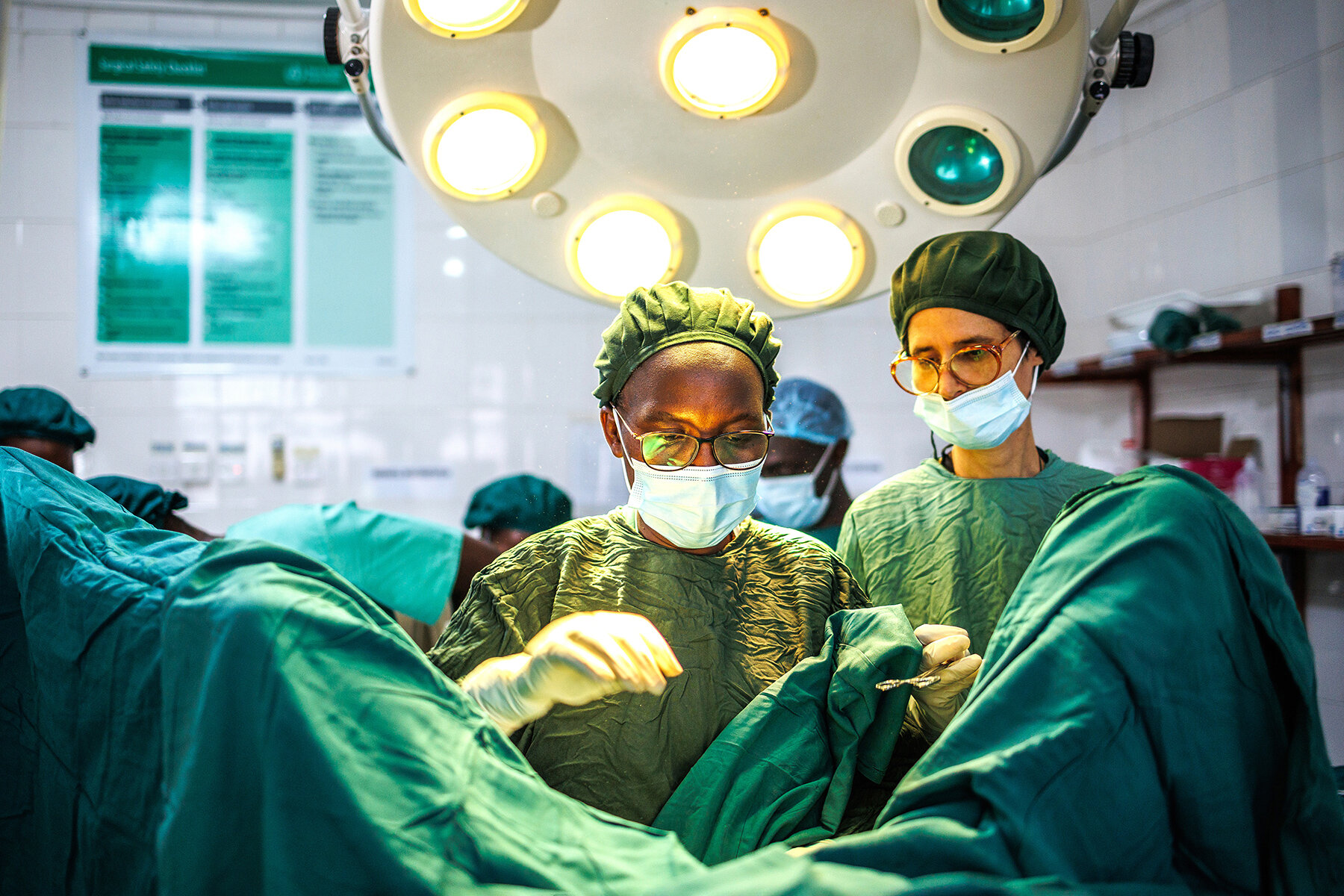
Dr. Priscilla Busingye, an accomplished fistula (birth injury) surgeon performs a birth injury surgery at Karoli Lwanga hospital, Nyakibaale western Uganda. Dr. Priscilla, a consecrated nun with the Catholic Banyatereza Sisters of Uganda, is the first woman and first African physician to win the L’Chaim Prize. Sister Priscilla is now one of only a handful of such specialists in all of Uganda, and a rare resource for the rural communities she serves. - Shot on assignment for African Mission Healthcare 2022
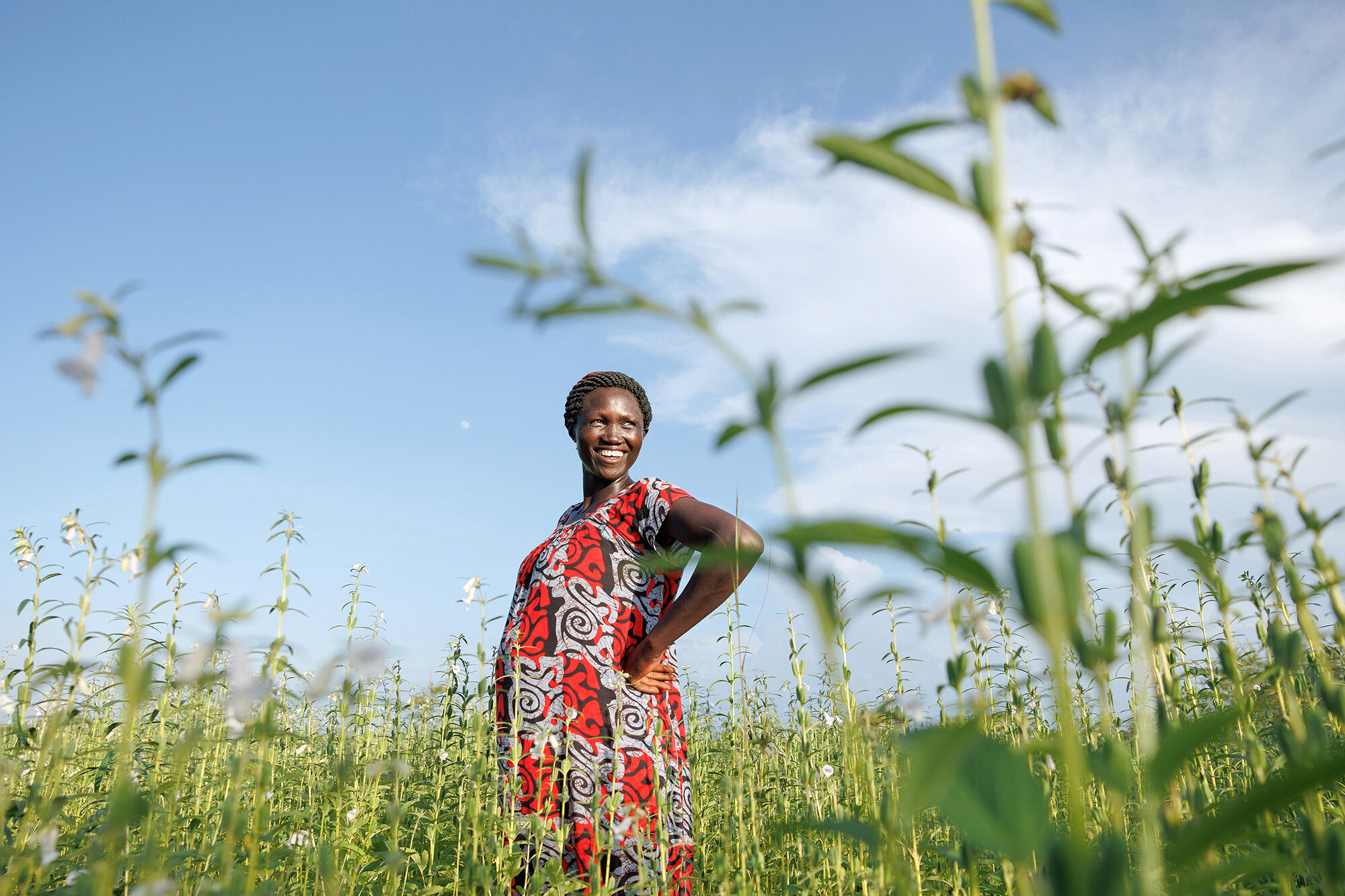
Kujang, a refugee from South Sudan stands in her vast simsim garden she owns with two other colleagues. Their group is a beneficiary of the DREAMS program which aims at enabling the poorest refugee and host community households to improve their income and well-being significantly and sustainably by providing them with the capital and skills. On assignment for Mercy Corps 2022
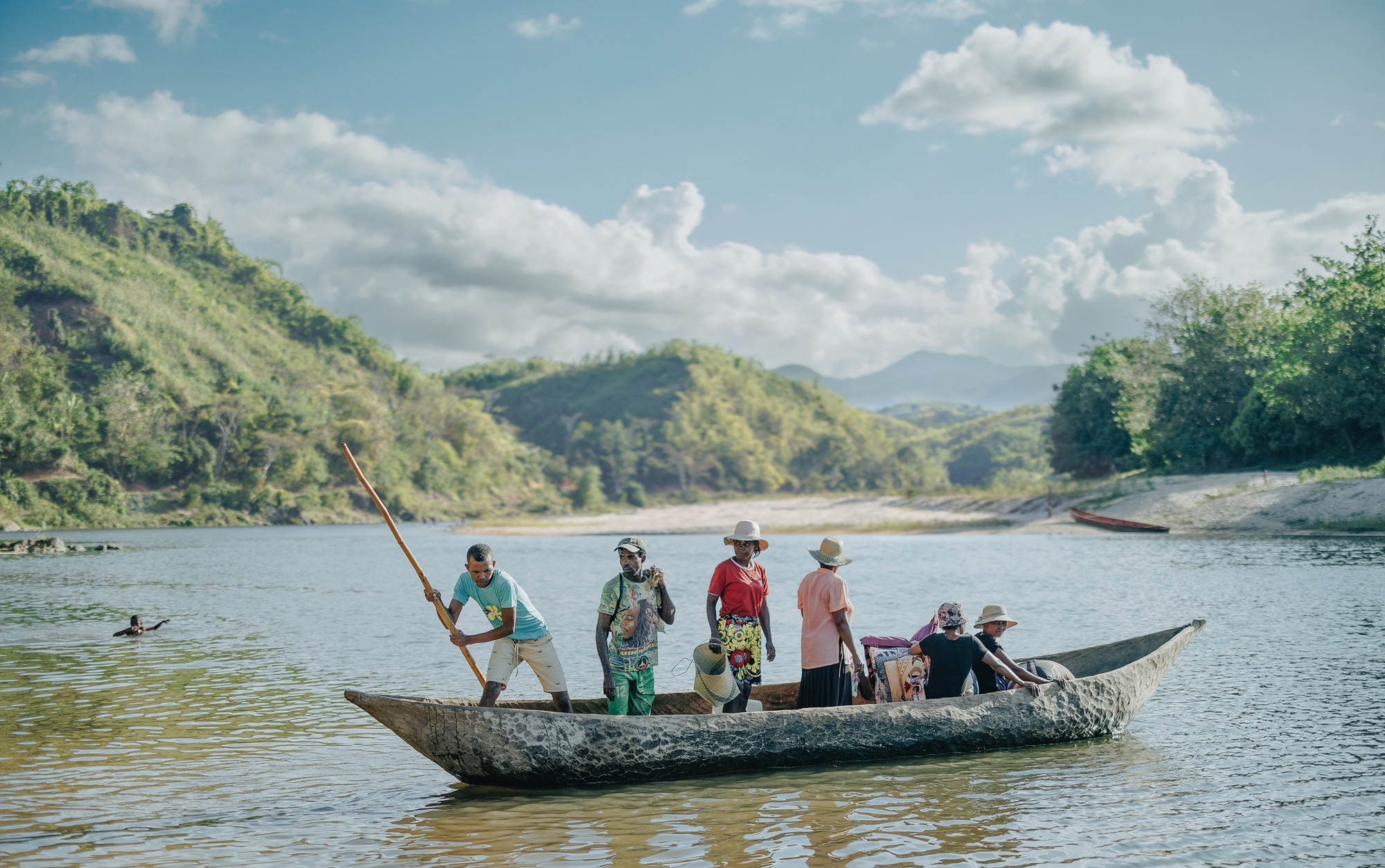
Madagascar by the River (Nov. 2023) Beautiful people, beautiful smiles, stunning rivers and a dazzling ocean. Madagascar will always be at heart. Those evenings by the river and how the sun kissed it… Felt like nature was bragging.
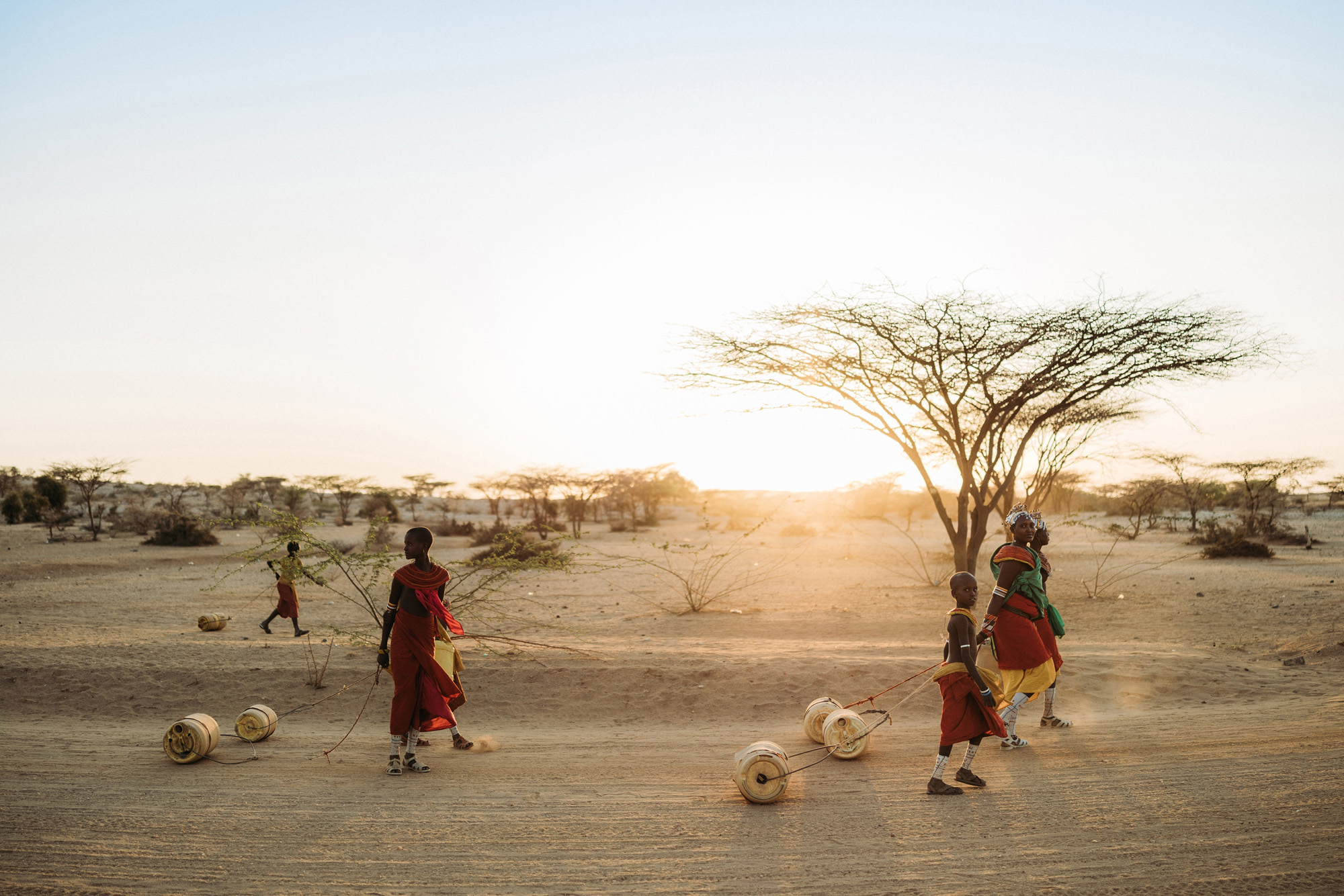
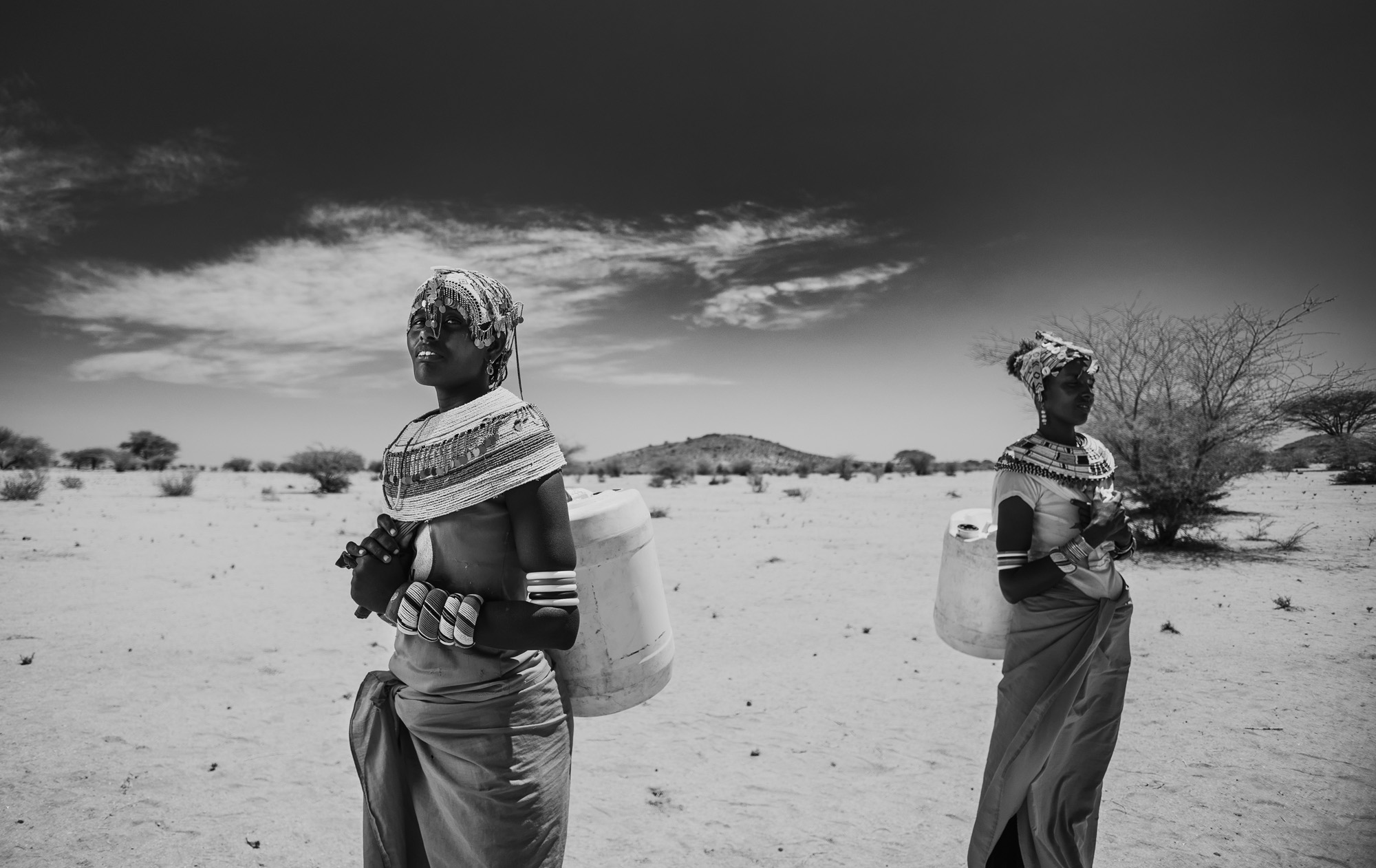
March 24, 2025 Korr, in the Marsabit county of Kenya. - Like in many other desert areas, water scarcity is a severe issue among the Rendille, impacting the community's well-being and daily lives. This makes it difficult to sustain agriculture, leading to challenges in securing enough food and increasing the burden on women and girls who must travel long distances to find water. The community relies heavily on artesian wells. The way they roll jerrycans on the ground is quite a scene. - © Jjumba Martin 2025.
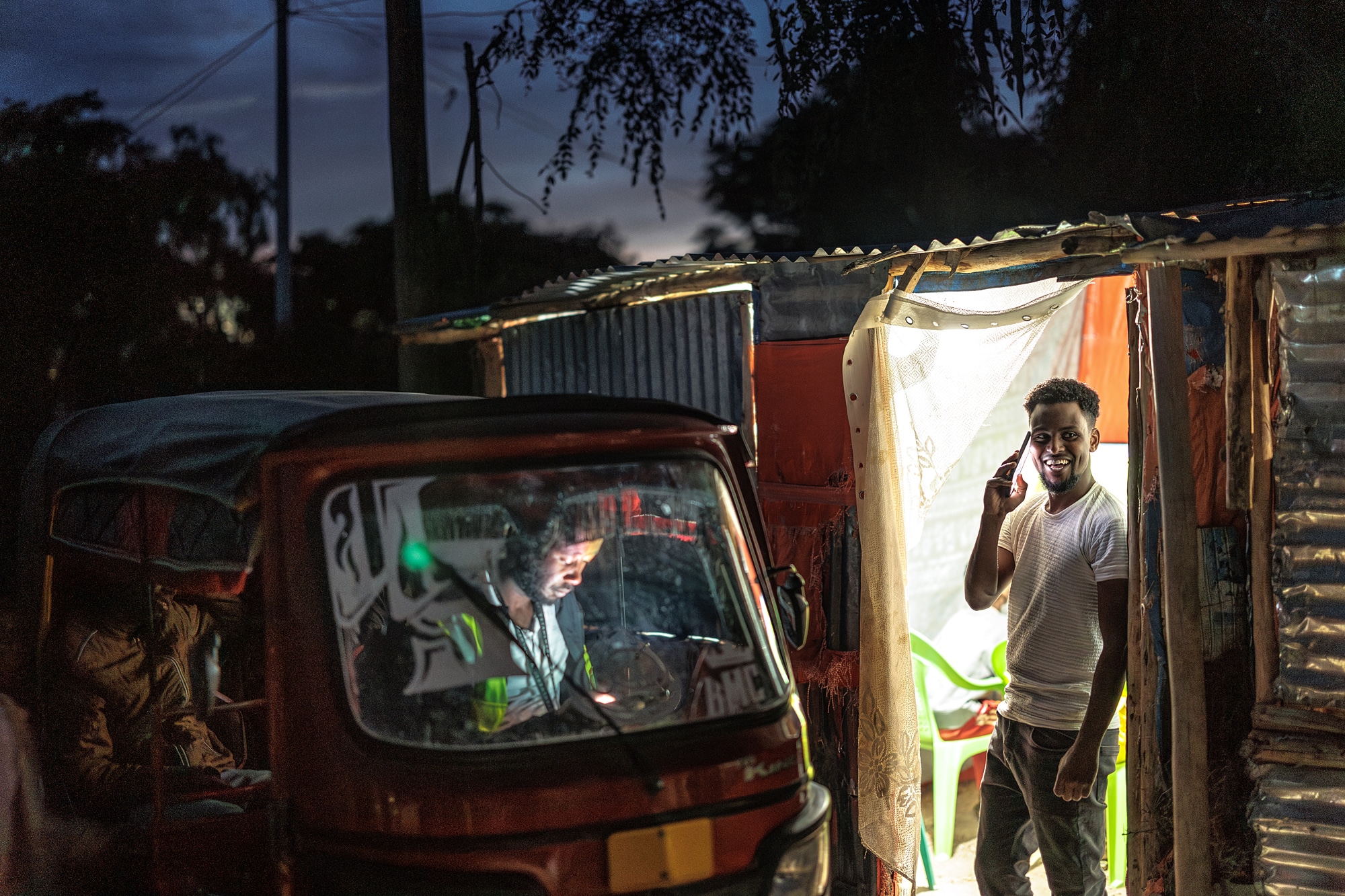
May 9th, 2024- Sheder Refugee Camp, Ethiopia. Osman makes a phone call to his friend at his gaming shop in Sheder refugee camp, northeastern Fafan Zone, in the Somali region of Ethiopia. Not long ago, diesel-powered generators permeated throughout Sheder Refugee Camp, providing some access to electricity to businesses like Osama’s. However, it was costly to operate, inconsistent, and only lasted two to three hours a day, making it difficult for small businesses to earn a steady income. Through The Enter Energy initiative, Mercy Corps’ flagship energy program, more than 1,000 households in Sheder are now connected to reliable and sustainable energy, after the construction of a 254 KW solar mini-grid station, the country’s first commercially licensed private solar PV-powered mini-grid. Humanitarian Energy customers have access to prepaid renewable energy, 24 hours a day—at half the cost of what they used to pay for two hours of diesel-powered electricity. Small business owners like Osama can improve their productivity and earn more money. © Jjumba Martin for Mercy Corps 2024.
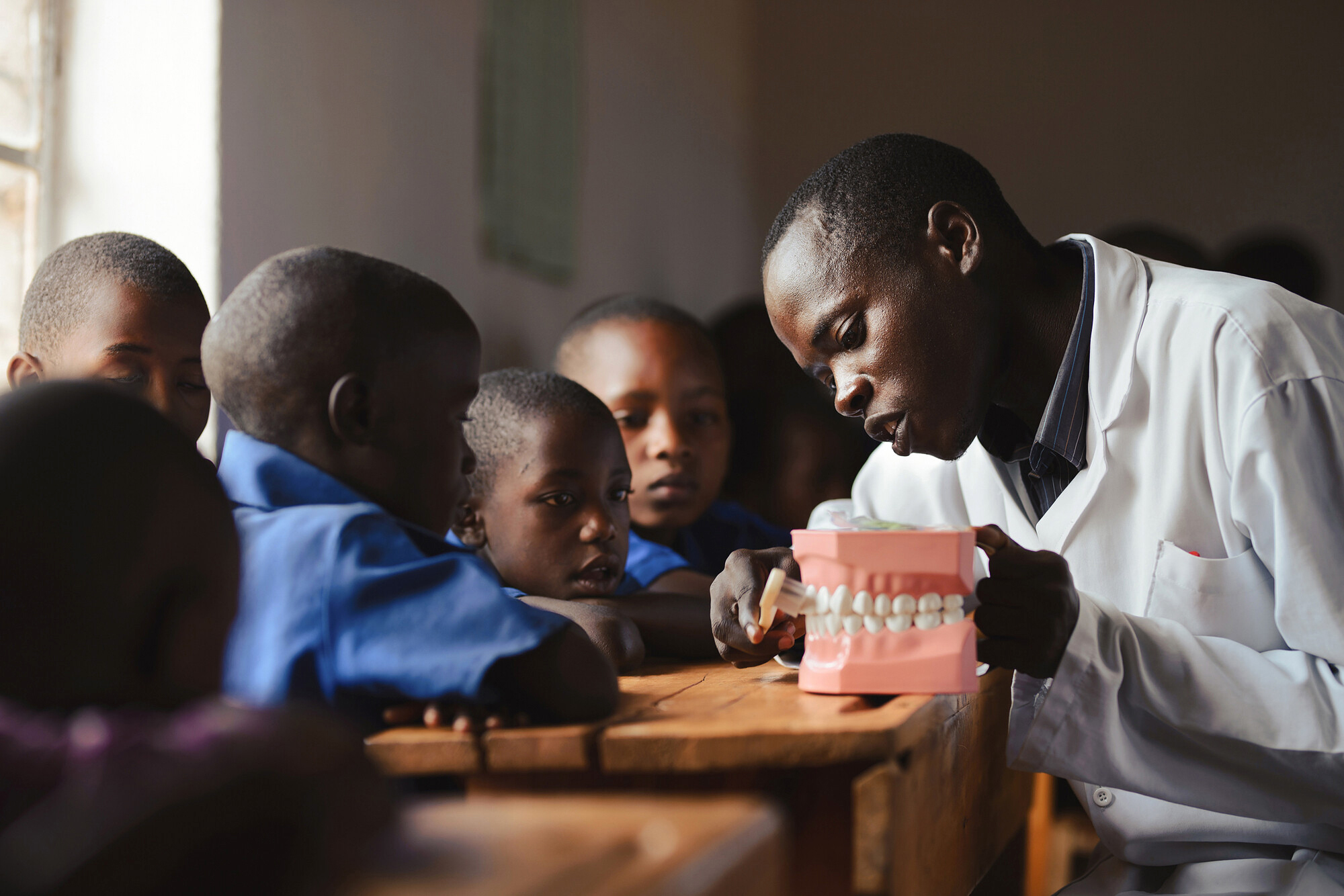
Dental Health Without Borders (Tandsundhed Uden Grænser ) / (TUG) is a Danish NGO aiming to improve life possibilities for children in some of the world’s poorest countries through better dental health. Toothaches make it hard to focus on school, and however simple it may sound, it’s the reality for many children in some of the poorest countries of the world. By spreading the Danish model for school dental care to the world’s “poorest” countries, TUG is looking at establishing sustainable dental development projects to ensure happier and healthier children.  TUG teaches school children how to take care of their teeth through daily toothbrushing programs in school. They collaborate with local NGOs and involve teachers, parents, health workers and dental professionals in order to create sustainable health models which can be continued locally. They also engage in dialogues with policymakers to advocate for school-based dental care on national and regional levels. - © Jjumba Martin, Tandsundhed Uden Grænser 2017 (Rwanda)
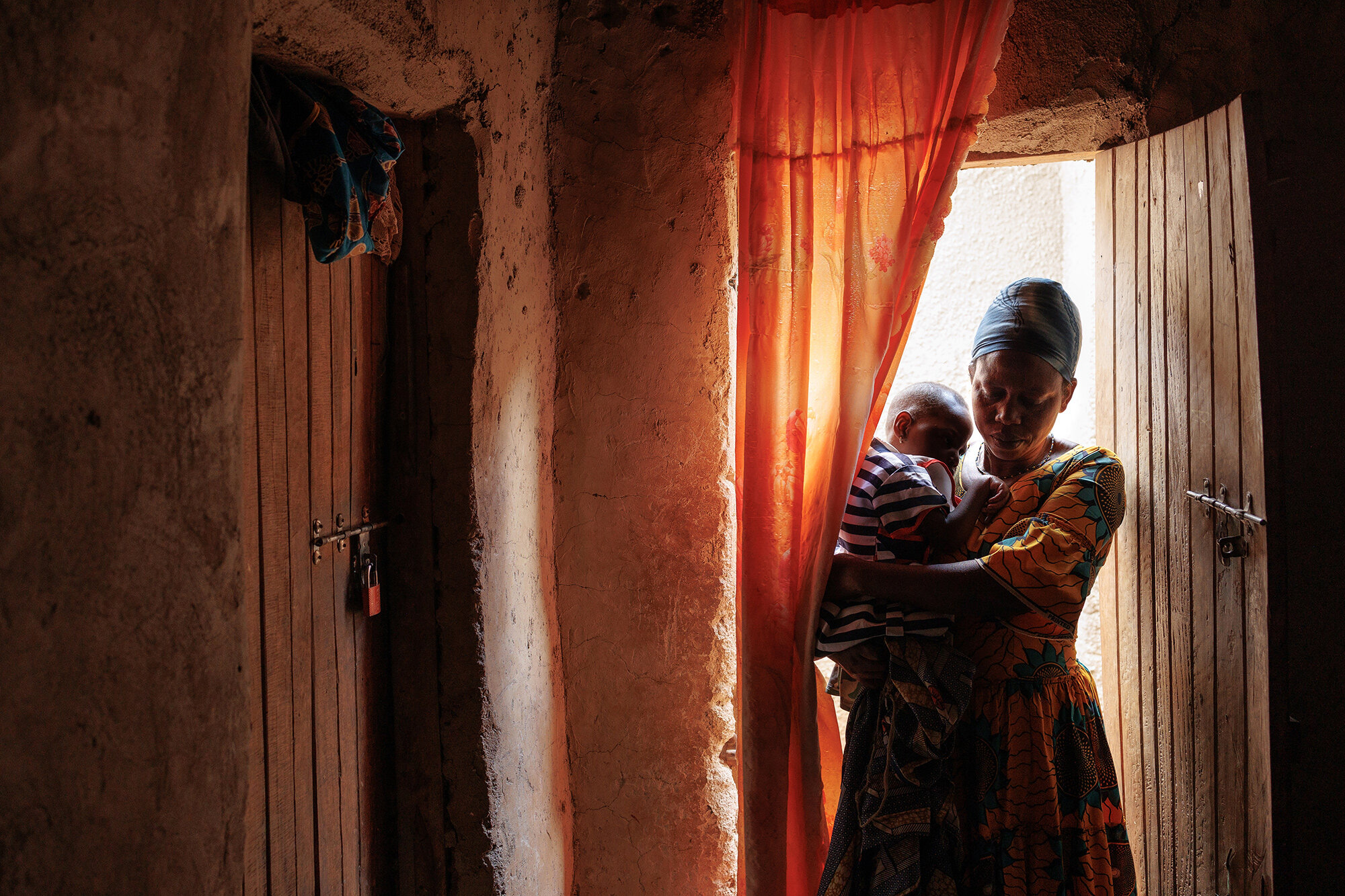
Kyaka refugee settlement - Felista enters her house with her 6-year-old daughter who cannot sit nor stand. Felista´s story highlights the challenges of living in a refugee settlement or camp with disability. She tends to her daughter 24 hours a day amidst the hardships of living in a challenging environment. - © Jjumba Martin, Chance for Childhood 2022
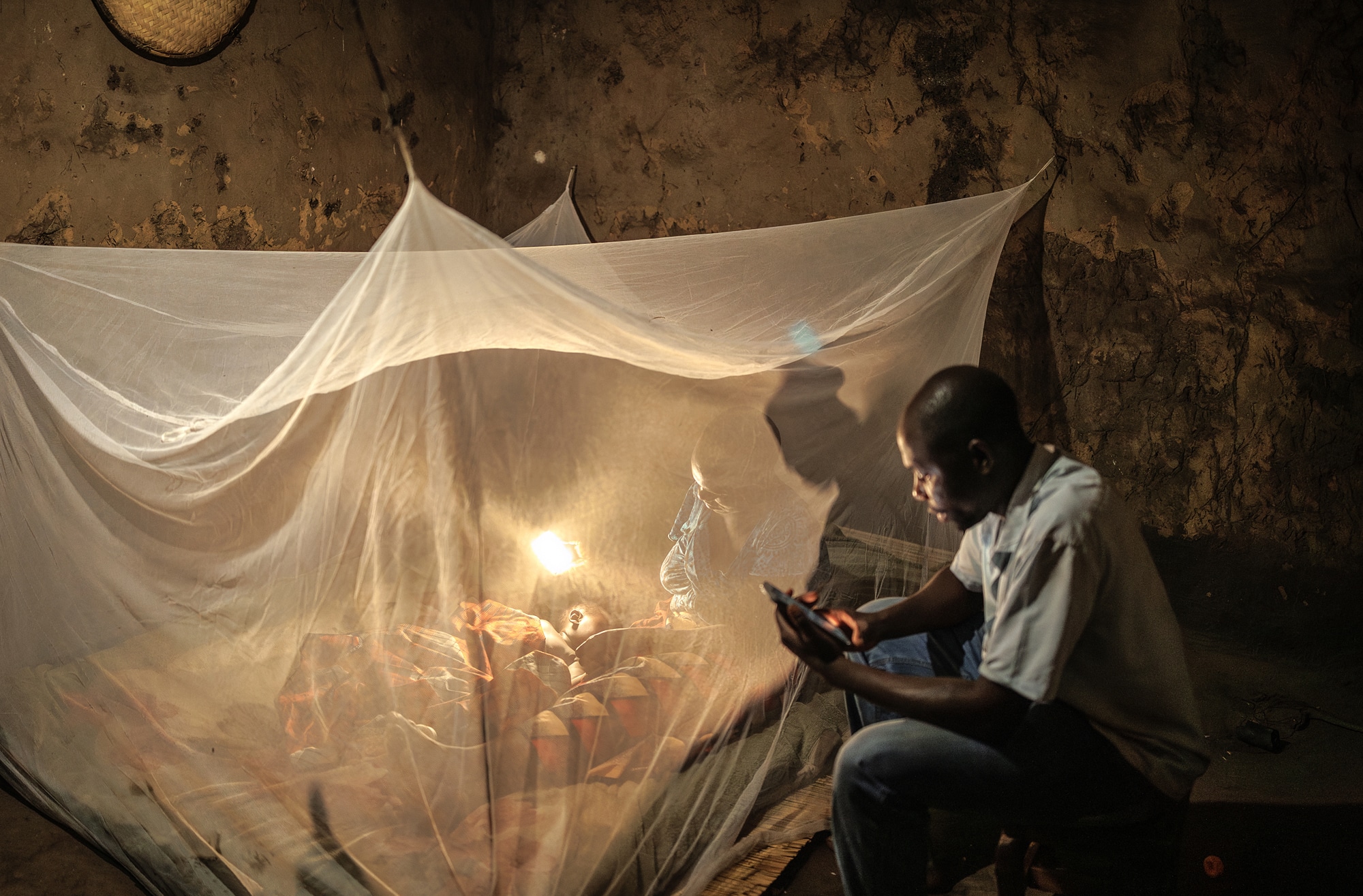
Balaka, Malawi November 2024. A mother pampers a baby to sleep under a PermaNet Dual mosquito net. Malawi is among the top 20 countries with the highest malaria prence and mortality rates. Luckily, Malawi and several other countries have seen transformative innovations, including long-lasting insecticide-treated nets, which have halved malaria mortality rates over the last two decades. Next-generation nets like PermaNet Dual include two active ingredients, adding chlorfenapyr to a pyrethroid, and have proved to enhance significant efficacy compared to other nets. They also address the issue of insecticide resistance. © Jjumba Martin, Vestergaard 2024.
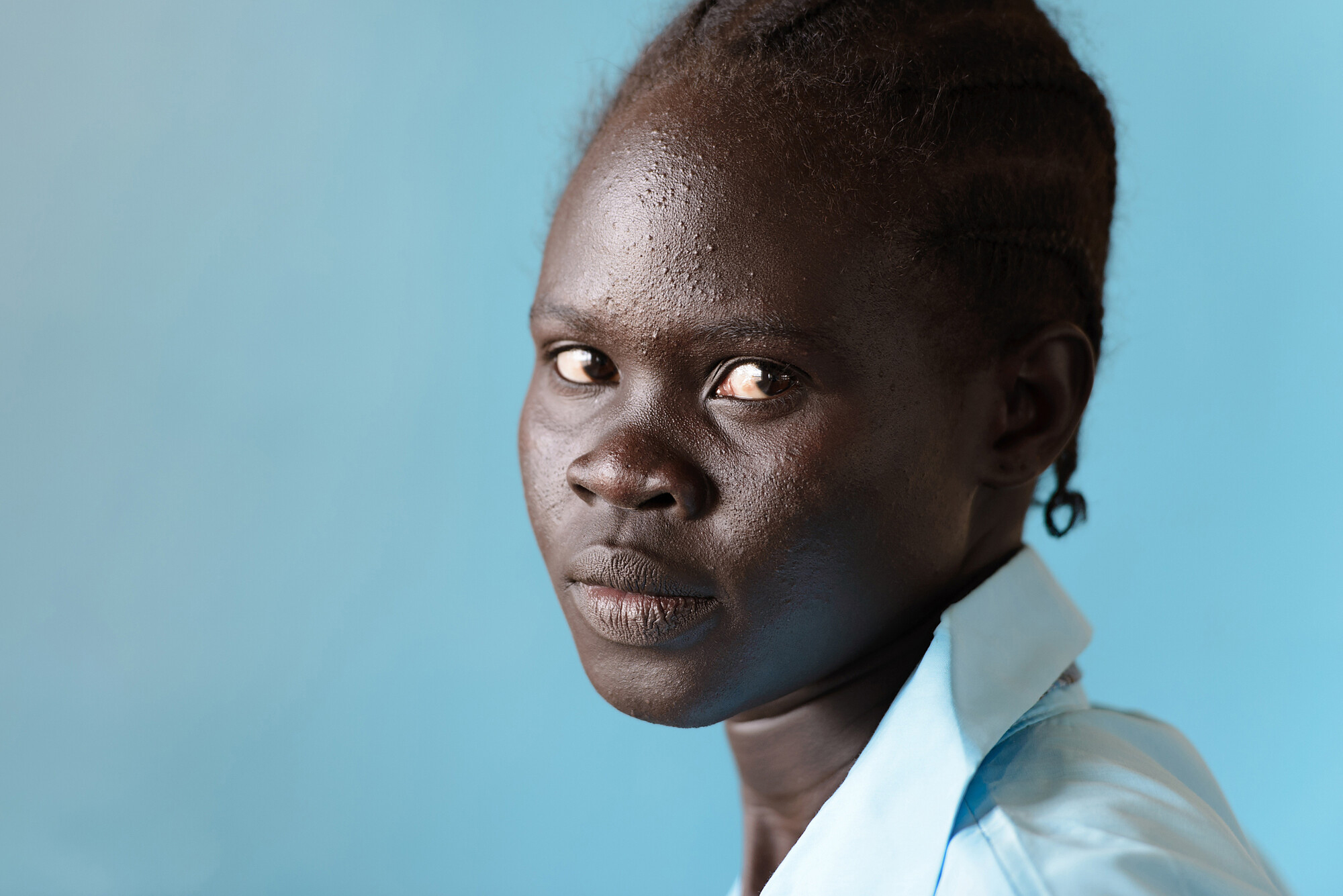
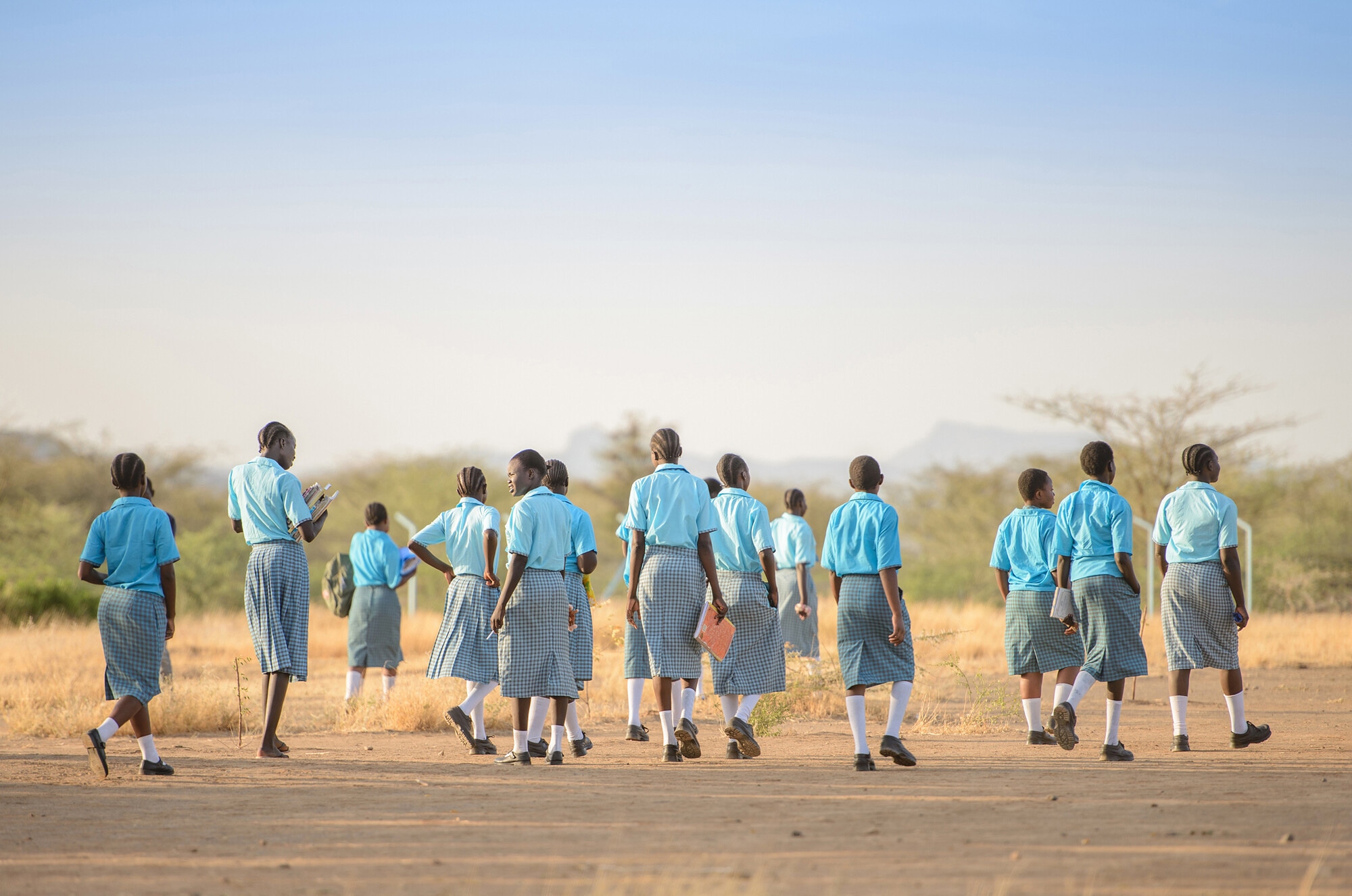
On assignment at Morneau Shepell Secondary School for Girls in Kakuma refugee camp, northern Kenya, I interacted with a group of young girls for about a week. This is a portrait of Amach, whose name means fire.  When we met, she had lived her whole life in Kakuma refugee camp. Her parents fled South Sudan in the late 80s. This school enrolled studious, hardworking girls while also helping the most vulnerable girls in the camp. These could be orphaned or lack family support and by going to the school, they are safe and can focus on their education. - © Jjumba Martin, GAS. Company (2015)
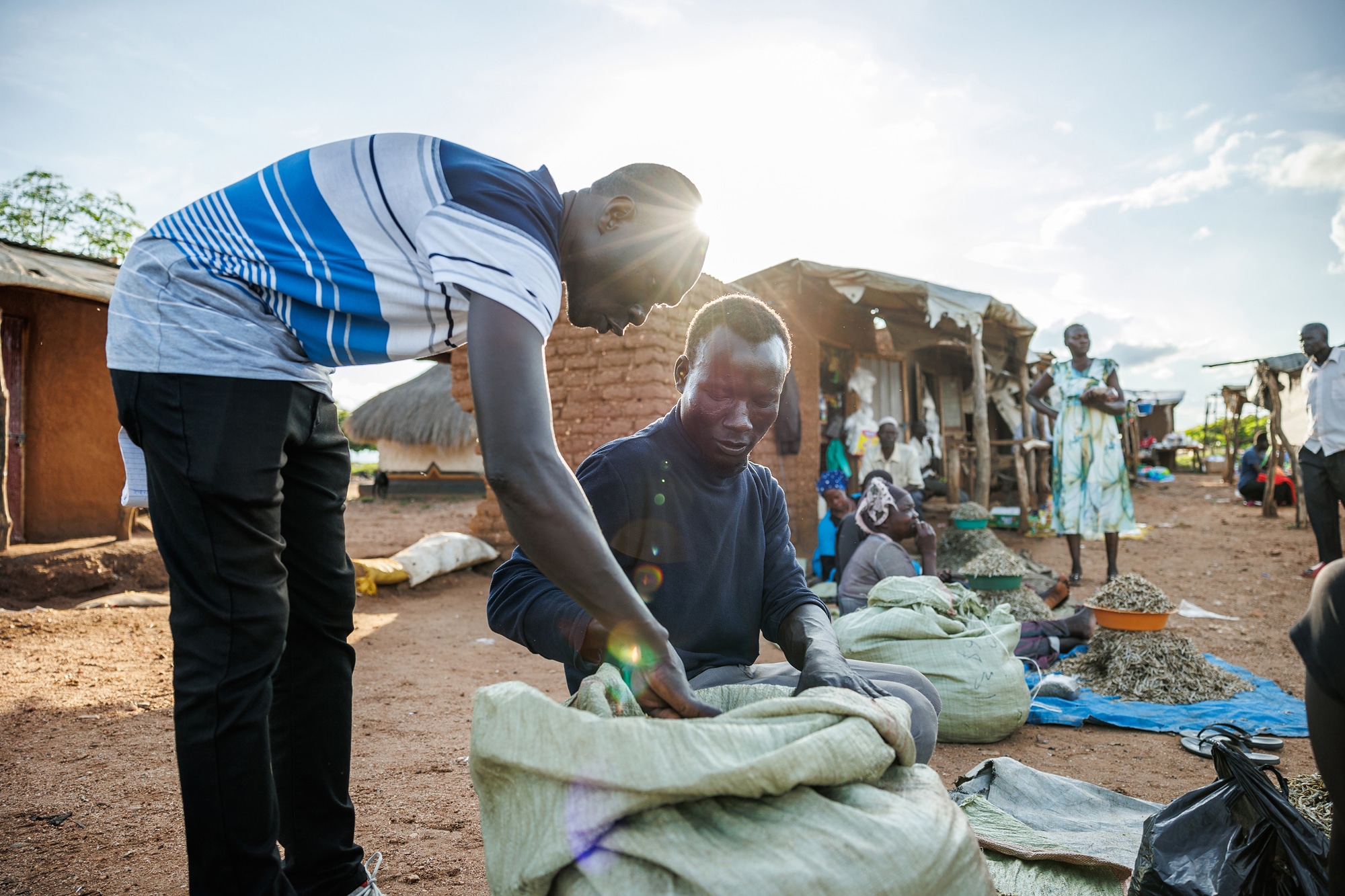
October 4th, 2022- Bidi Bidi refugee settlement. John Sanya, a Project Officer at Mercy Corps interacts with Festo James, a South Sudanese refugee, and beneficiary of the DREAMS Program that Mercy Corps is implementing in a consortium with Village Enterprise. Village Enterprise has been supporting business groups of three members with a grant to start a business and business training sessions for sustainability. This is all in a bid for the refugees to earn an income and improve their well-being. James and his two colleagues have set up this business in the local market where they sell silver fish, a popular and high-nutrient dish among the people here. © Jjumba Martin, Mercy Corps 2022.
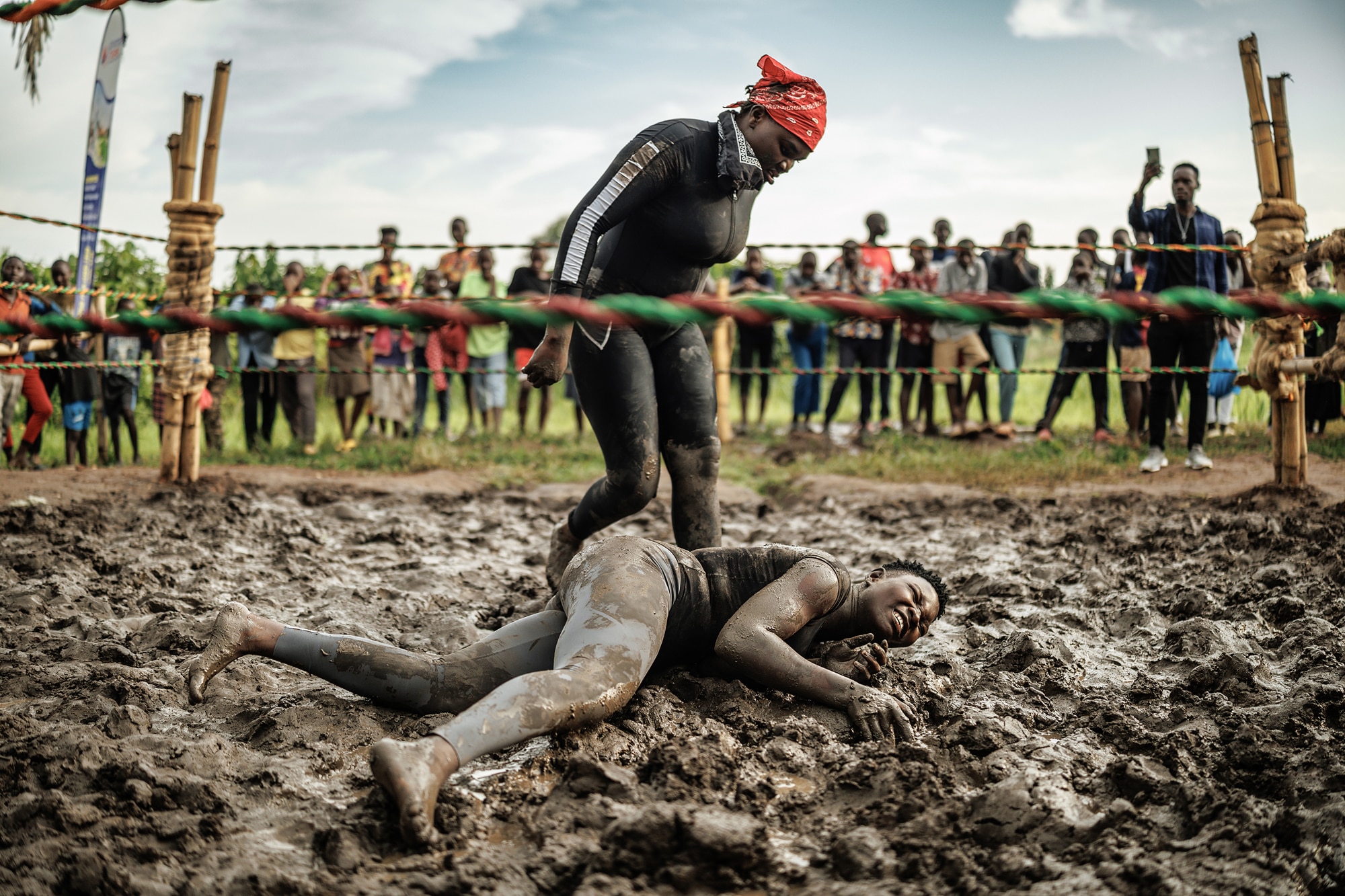
Mukono, Uganda, 15 December 2024 Nestled in a marshy plot surrounded by eucalyptus trees and yams, Soft Ground Wrestling is a fascinating Ugandan wrestling initiative. Think WWE, but instead of flashy arenas and fancy rings, dry bamboo poles bound by conventional ropes surround a square of soft clay soil to separate wrestlers from spectators. Within the ring, young barefoot Ugandan youths hope their skills will lead to fame and glory as they train in ‘soft ground wrestling.’ The fighting sessions, complete with an announcer and referee, imitate the pro wrestling contests as seen on television. The hope is that some of these wrestlers can do well and go professional internationally. © Jjumba Martin for VICE 2024
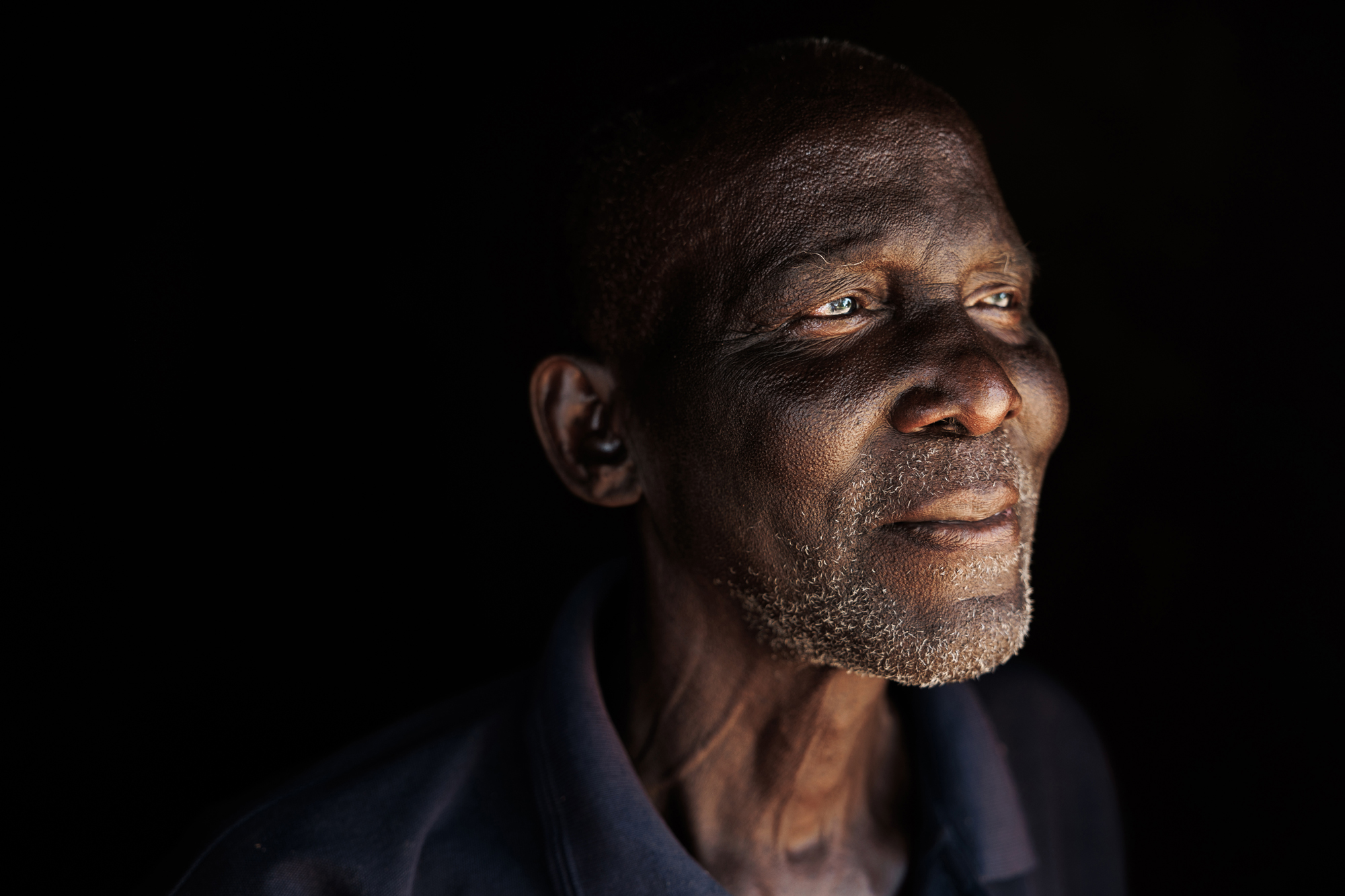
27/08/2023 Buliisa - Western Uganda - Mugisa was detained for about two months because he "disagreed with Total's oil and gas activities" in Uganda. He is the chairman of the Oil and Gas Human Rights Defenders Association, a neighborhood non-profit organization that works to have the multinational recompense the expropriated residents fairly. The majority of them are peasants who reside on land that they are no longer permitted to exploit. The NGO's offices were shut down by the authorities in October 2021, and Mugisa was taken into custody a short time later. He spent fifty-eight days in prison. "The conditions were very harsh, I was in isolation, in the dark. Not the right to go out at all, he says. That's why now I have vision problems. Prison food gave me diarrhea, and the water was not drinkable. Since then, I have developed sicknesses."
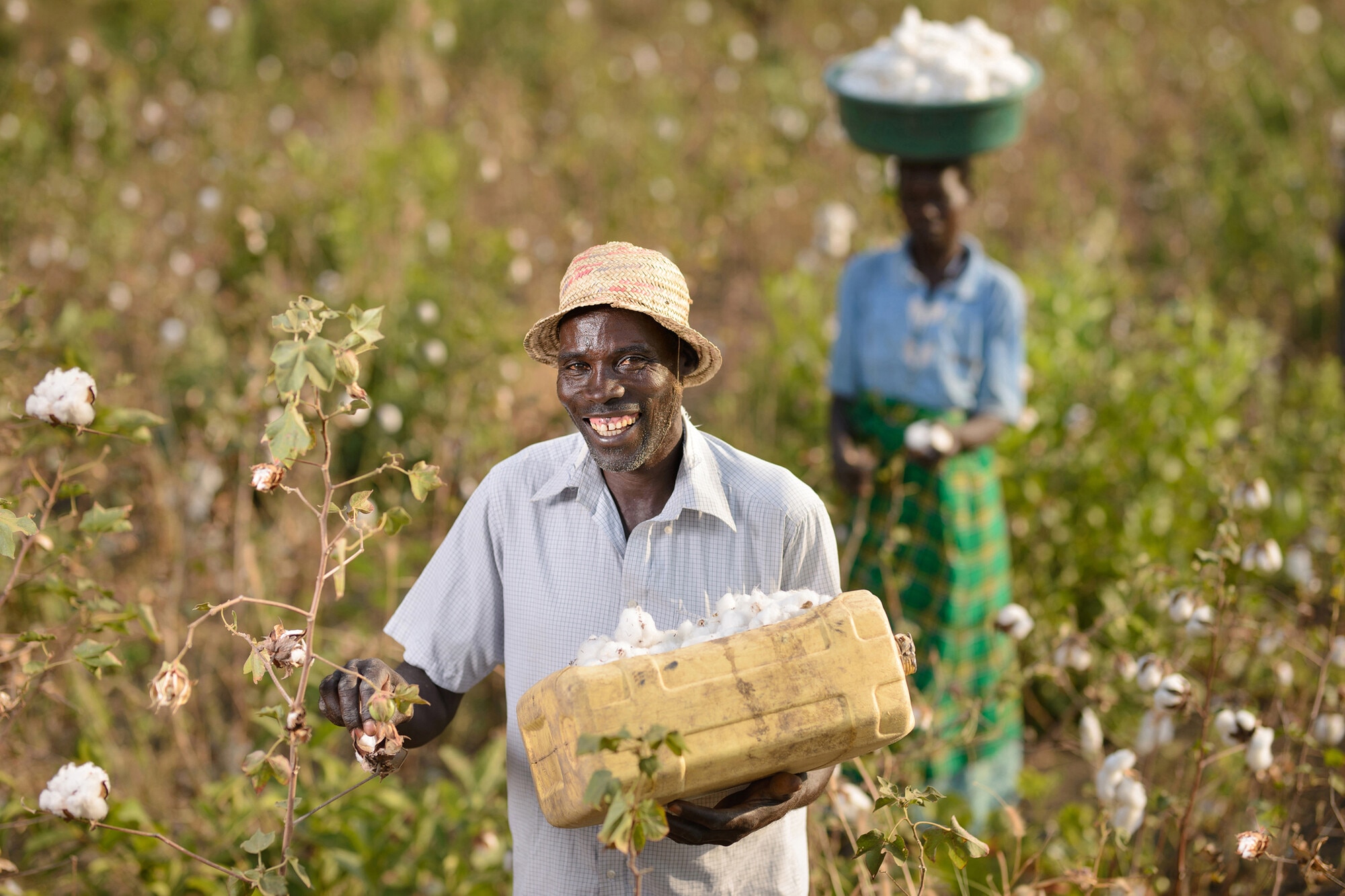
With support from AgDevCo and the Smallholder Development Unit, the Gulu Agricultural Development Company (GADC) started the process of agricultural transformation in Northern Uganda. It is empowering returning subsistence farmers like Ayoo and developing their agricultural, financial and business skills. It connects fields to markets and producers to exporters. In the 1960s, northern Uganda had a thriving agricultural sector and was one of sub-Saharan Africa’s largest cotton producers. However, since that time, it has been troubled by conflict. The activities of the Lord’s Resistance Army created a civil war that at its peak in 2005, left 1.8 million northern Ugandans living in camps, without access to their farmlands. Many families lost their homes in the conflict. Young people also lost the chance to learn farming skills as they grew up away from the land. © Jjumba Martin, AgDevCo 2018 (Kitgum Uganda)
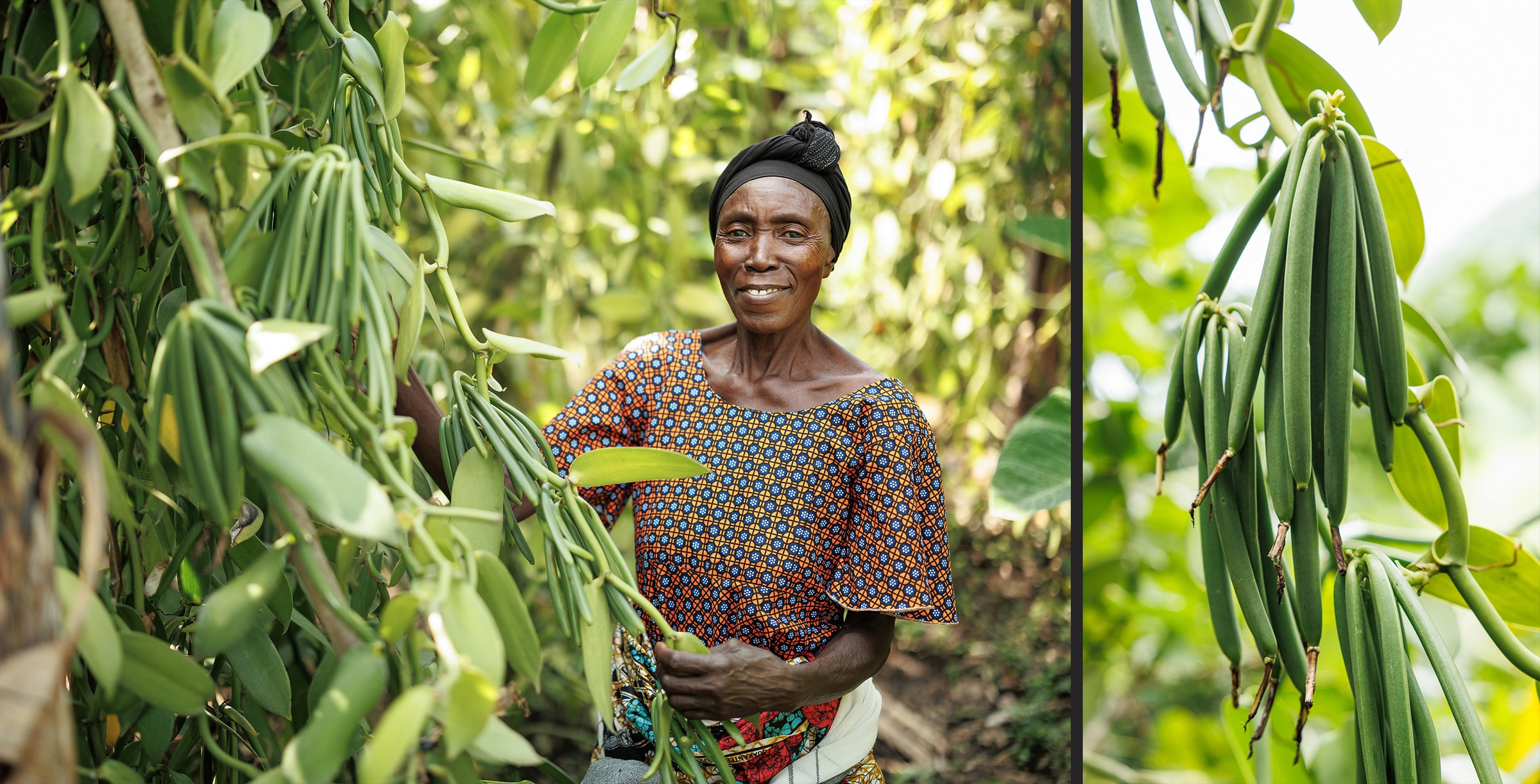
Women are increasingly engaging in the vanilla chain, and this provides income, enabling them to support their families and contribute to community development. The financial independence gained also empowers them to make decisions about their lives and participate more fully in community affairs. © Jjumba Martin 2023.
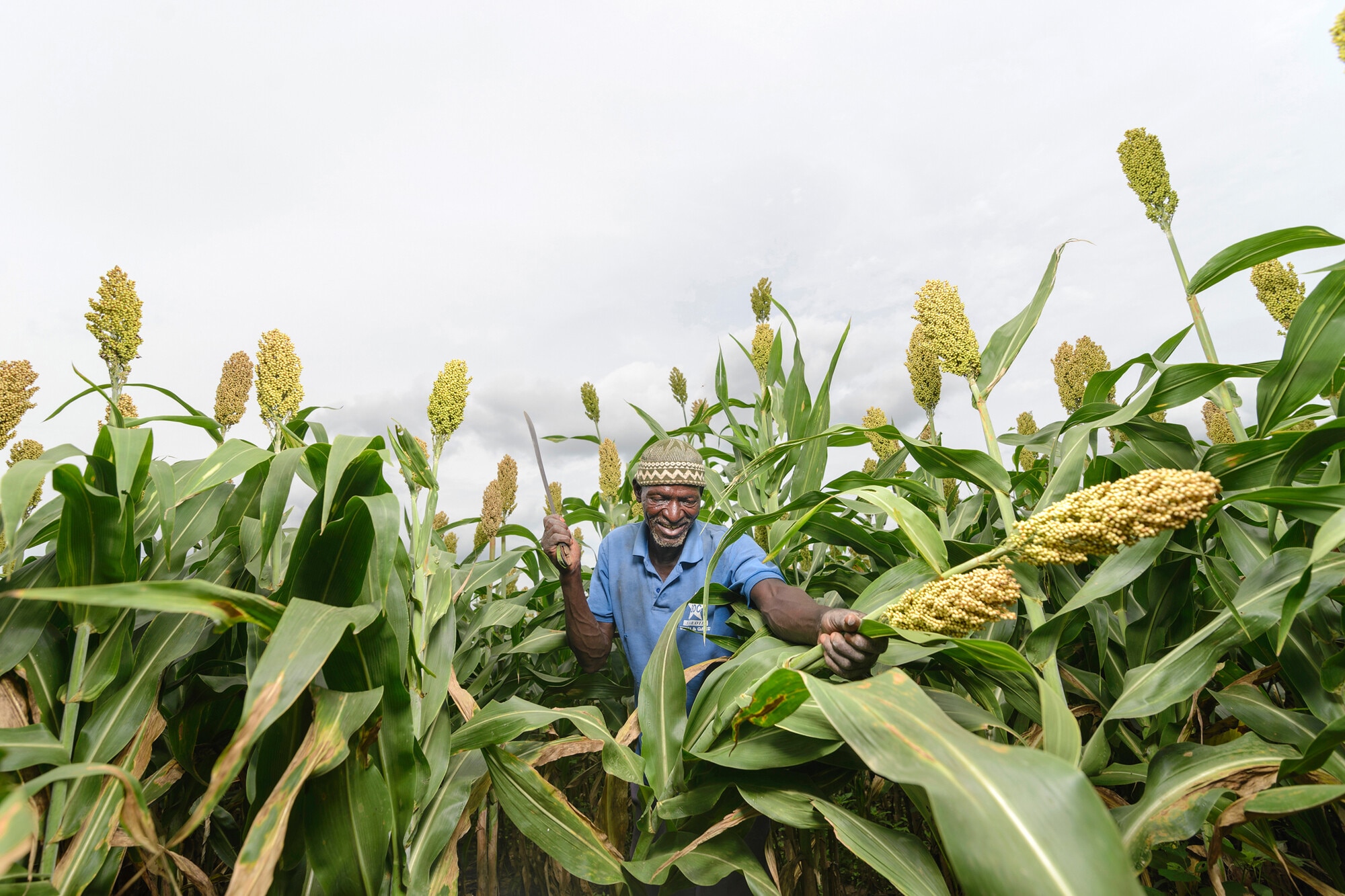
Duut Kombat, millet farmer in Bawku East, Ghana. © Jjumba Martin /AgDecCo 2018
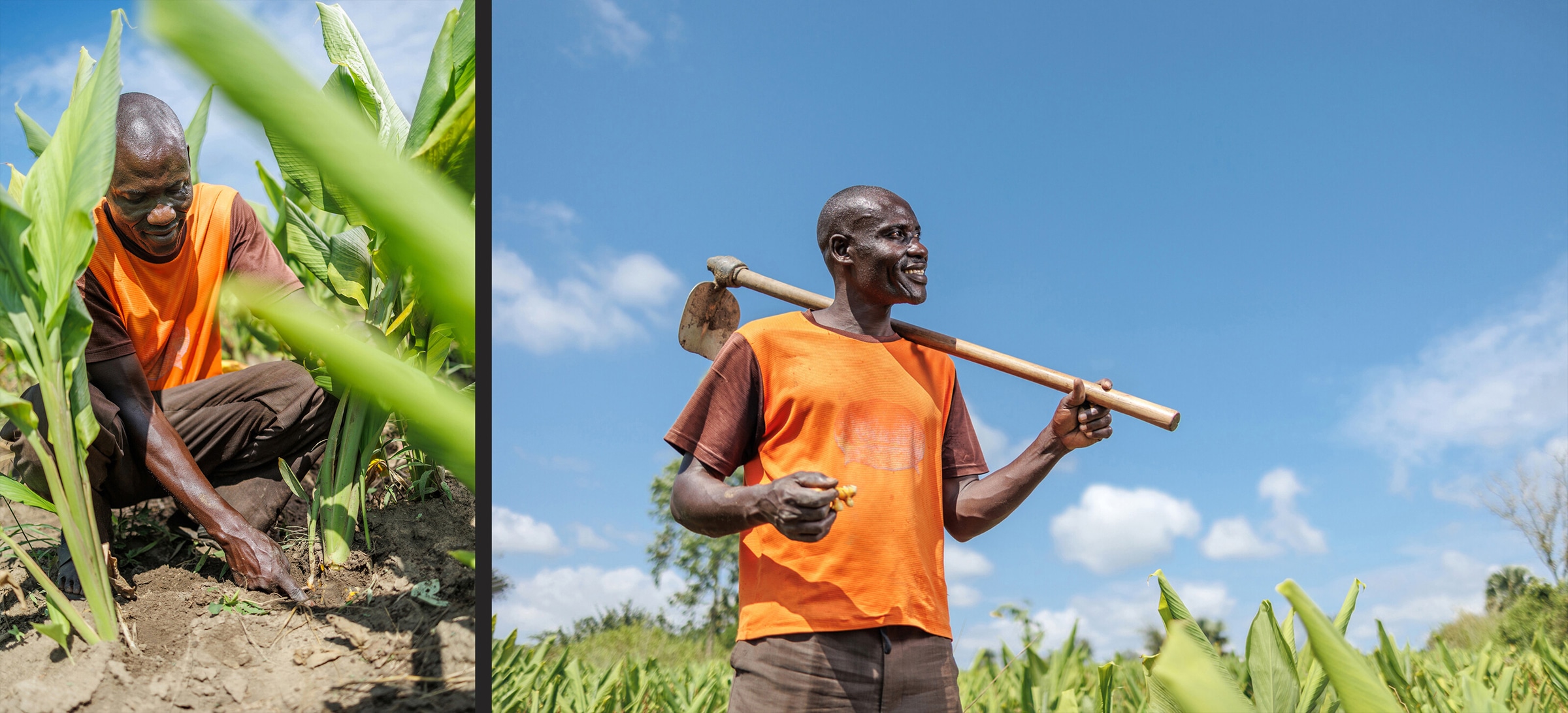
Joseph Nyakuni, a potato and turmeric Farmer in Obio village, Omugo sub-county, Terego district, northwestern Uganda. He grows both Naspot and Beauregard varieties of potatoes. Naspot 1 and Beauregard are both improved varieties of sweet potato that have been tested in Uganda. They are known for their large size, red skin and orange flesh © Jjumba Martin, DCA 2022.
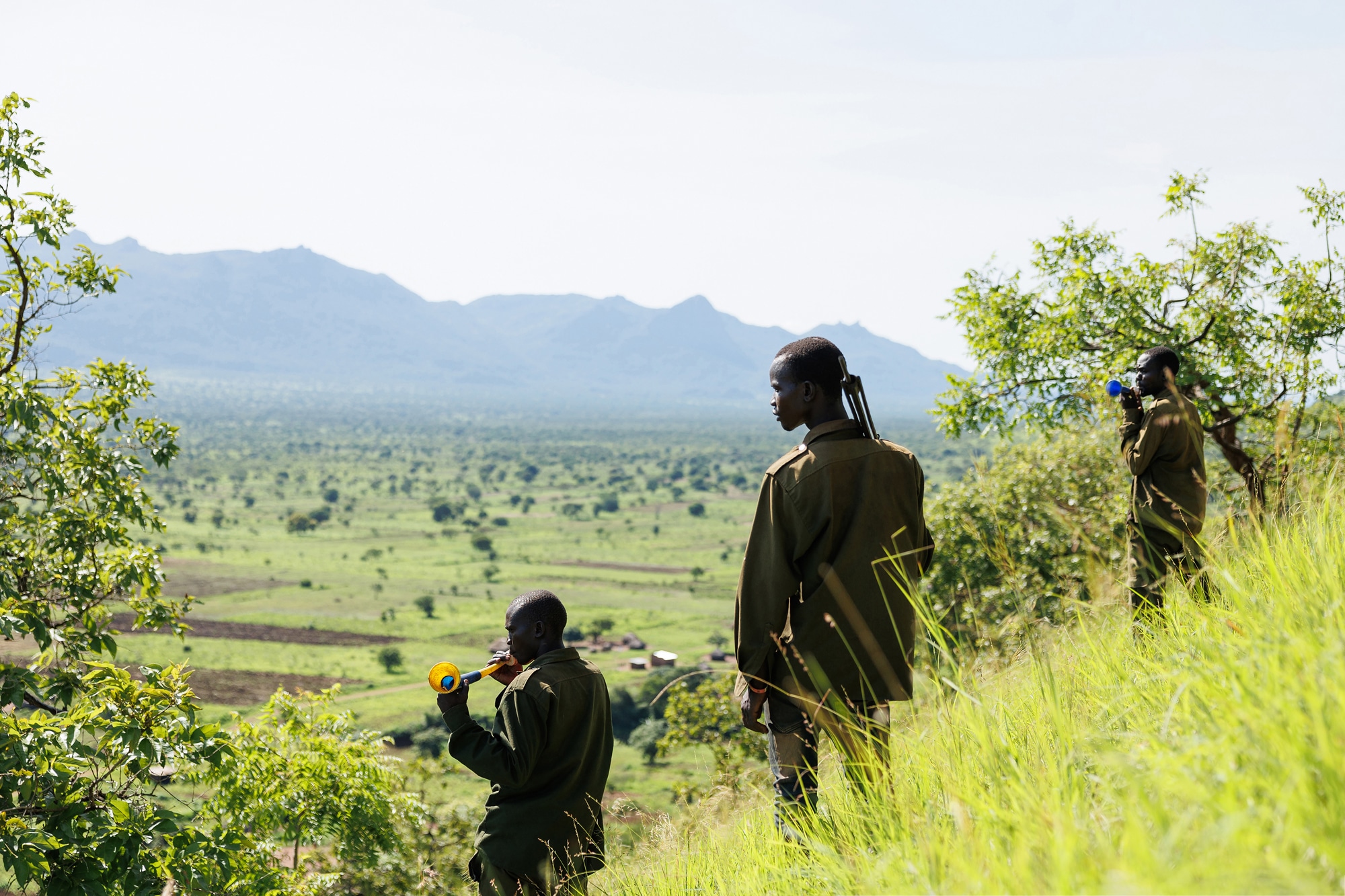
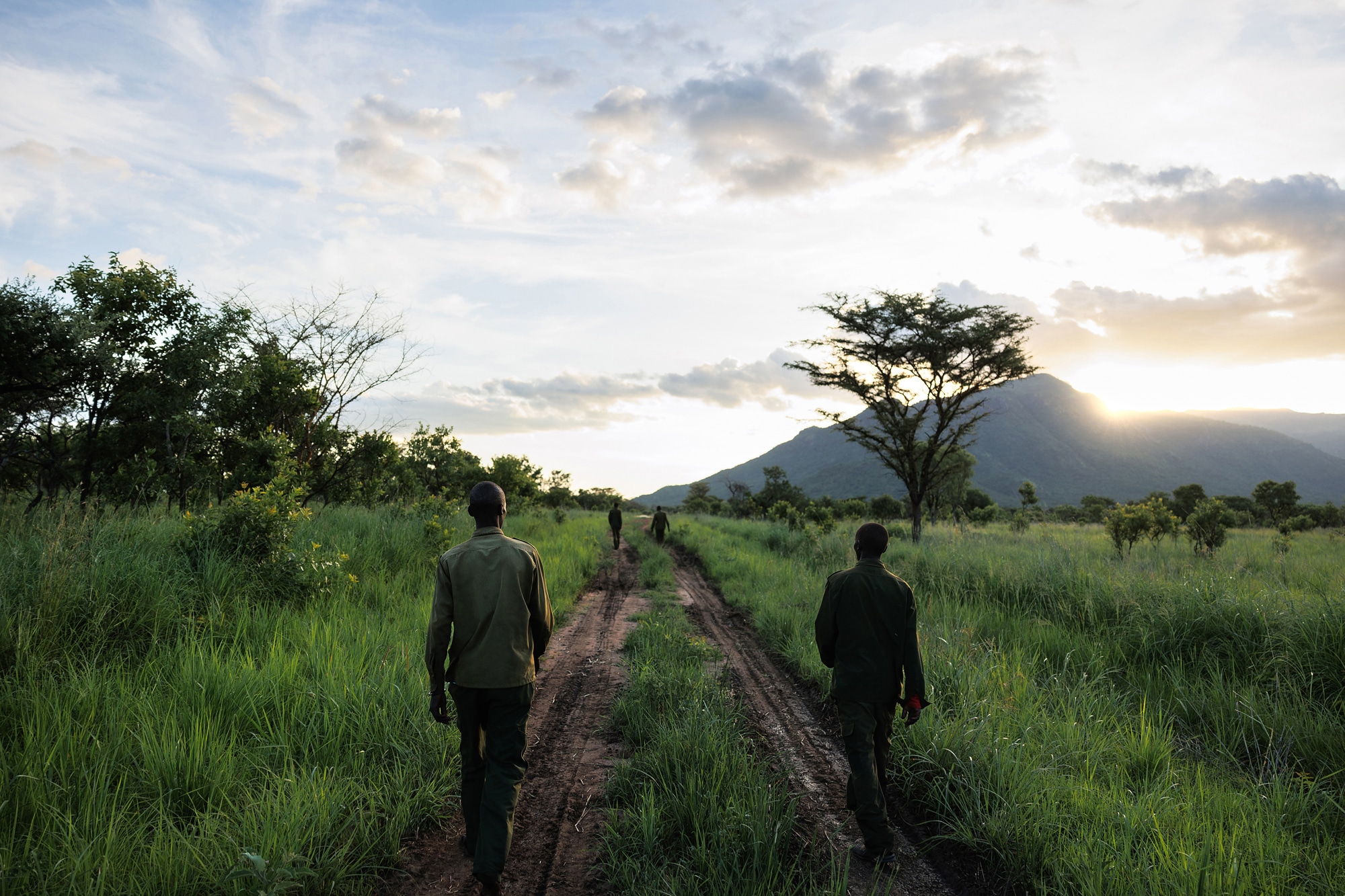
Community Wildlife Scouts of Orom Conservancy. These men, are usually sourced from the community, and they use bangs and vuvuzelas to scare away elephants from entering their gardens. They also warn communities about their invasions. The initiative is under Umoja Wildlife Conservancies, a non-profit working to strengthen community participation in managing wildlife outside protected areas by developing strong community structures towards conservation and demonstrating tangible benefits of wildlife to these neighboring communities and landowners. By promoting a community-based human-wildlife conflict mitigation approach, Umoja empowers communities to address the conflicts on their own, thus encouraging coexistence between people and wildlife amidst escalating human-wildlife conflict as visible all over the world. © Jjumba Martin, Umoja Wildlife Conservancies 2023
Community Wildlife Scouts of Orom Conservancy. These men, who are usually sourced from the community use bangas and vuvuzelas to scare away elephants from entering their gardens. They also warn communities on their invasions. The initiative is part of Umoja Wildlife Conservancies of Uganda, founded in 2021, dedicated to empowering communities and landowners to conserve and manage wildlife on their land.
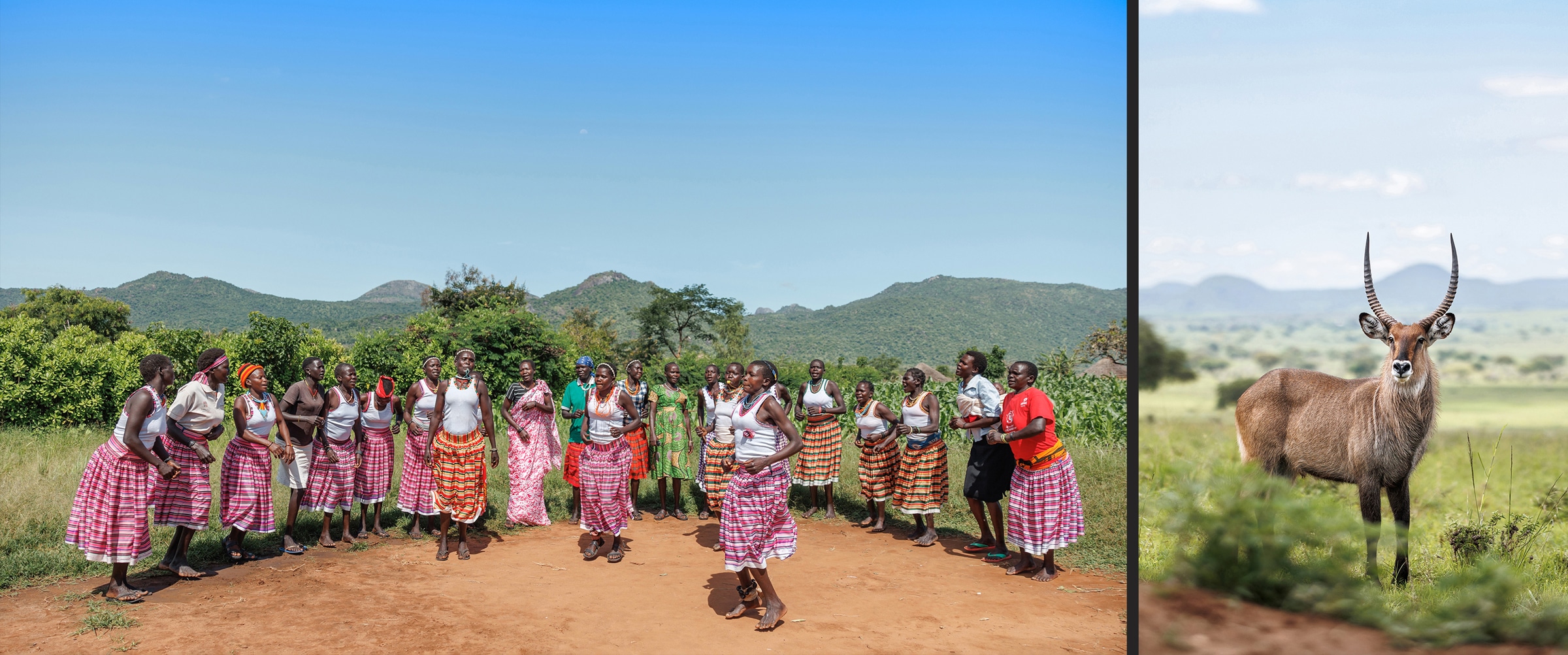
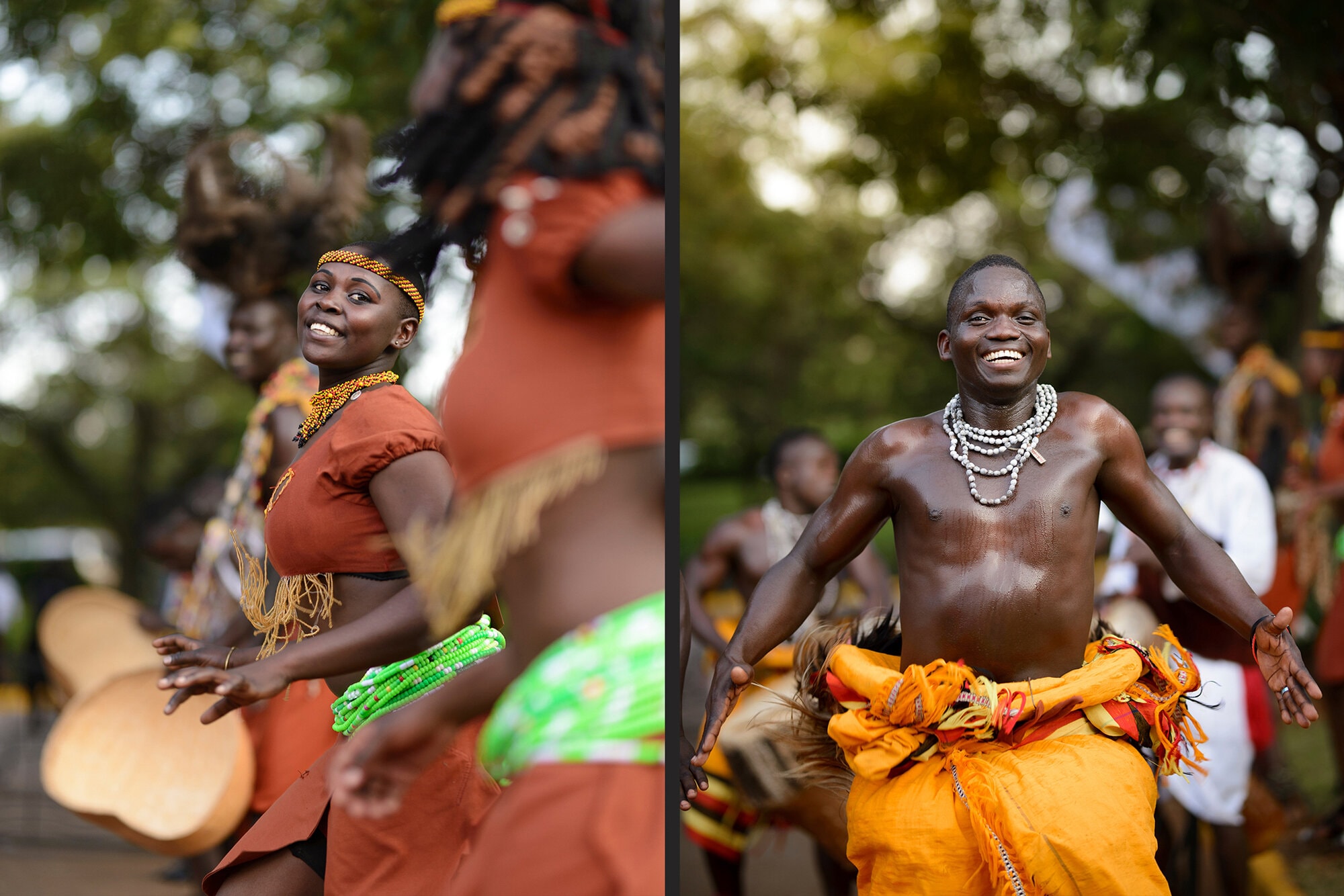
A community in Orom, Northern Uganda, performs a traditional dance by the boundaries of Kidepo National Park. Communities around protected areas like this are empowered to conserve and manage wildlife on their land, however much the human-wildlife conflict in Uganda is a growing problem that threatens the balance between conservation and the livelihoods of these communities. Several factors, including population growth, habitat loss, and competing interests cause the conflict. In recent years, community wildlife conservation in Uganda has gained significant traction, leading to a notable increase in both community and private conservancies. © Jjumba Martin, Umoja Conservancies 2023.
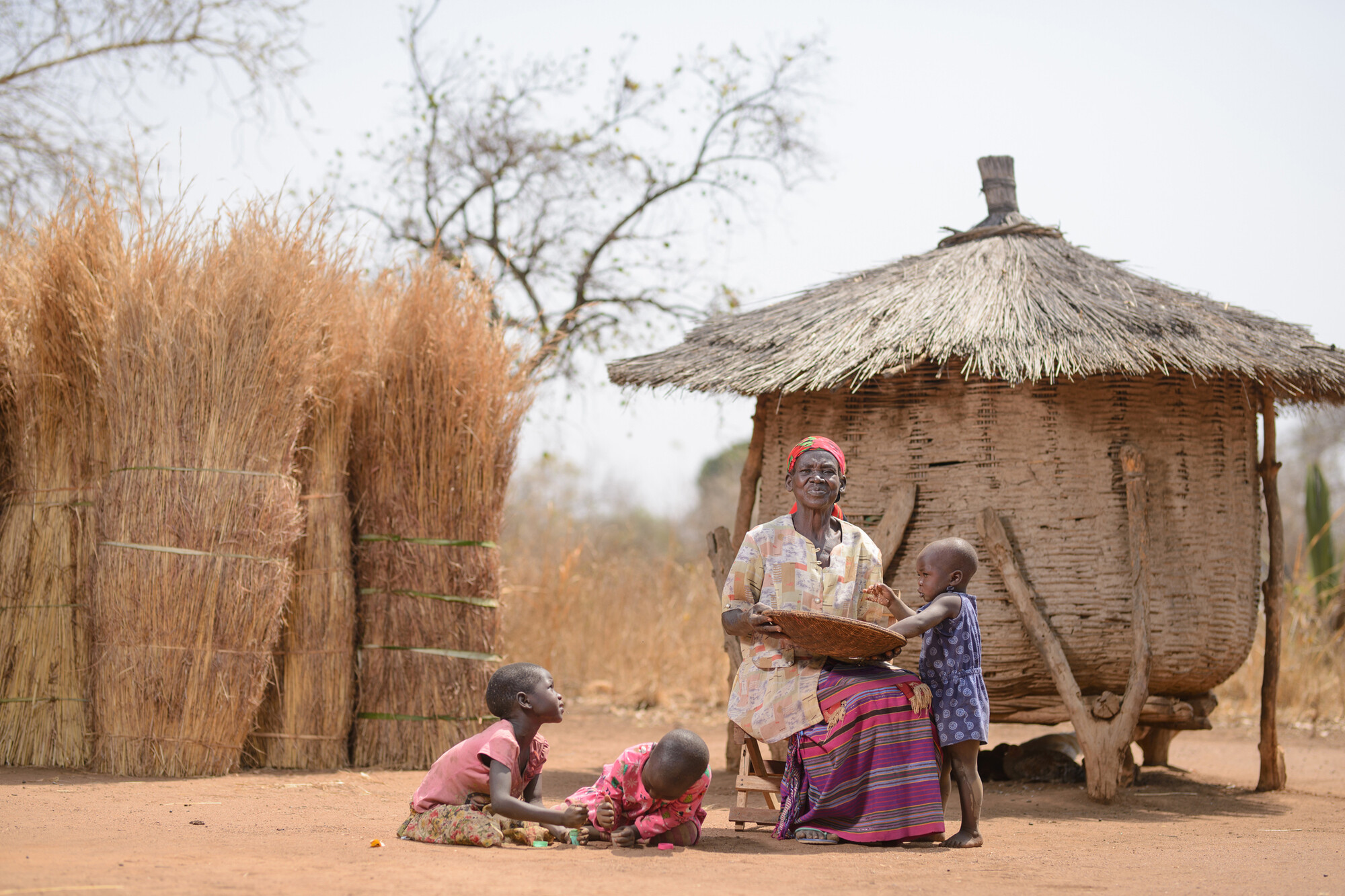
25/01/2018  Kitgum, Uganda - Ayo Narasista with three of her grandchildren at her home in Kitgum, northern Uganda.  To many of us, Kony and his Lord's Resistance Army (LRA) are another story that we hear of. For Ayo Narasista,  it’s a story that impacted her life. Her son, who was her hope for continuing the family name was abducted by armed men on his way from school in 2002. He was 13 years old then.  Ayo's son was abducted during the 20-year conflict in northern Uganda between the Lord’s Resistance Army and the government of Uganda. Thousands of people went missing as a result of the fighting, and the fate of many of them remains unknown today.  So isolated and depressed, I had a daughter but she also died, leaving me with 6 grandchildren to raise.” Ayo’s situation highlights one of the crucial roles grandmothers often play in raising grandchildren in African settings. Many times, they are primary caregivers, providing stability and offering emotional support, particularly when parents are unable to do so due to factors like poverty and death. - © Jjumba Martin for The International Red Cross and Red Crescent Movement 2018
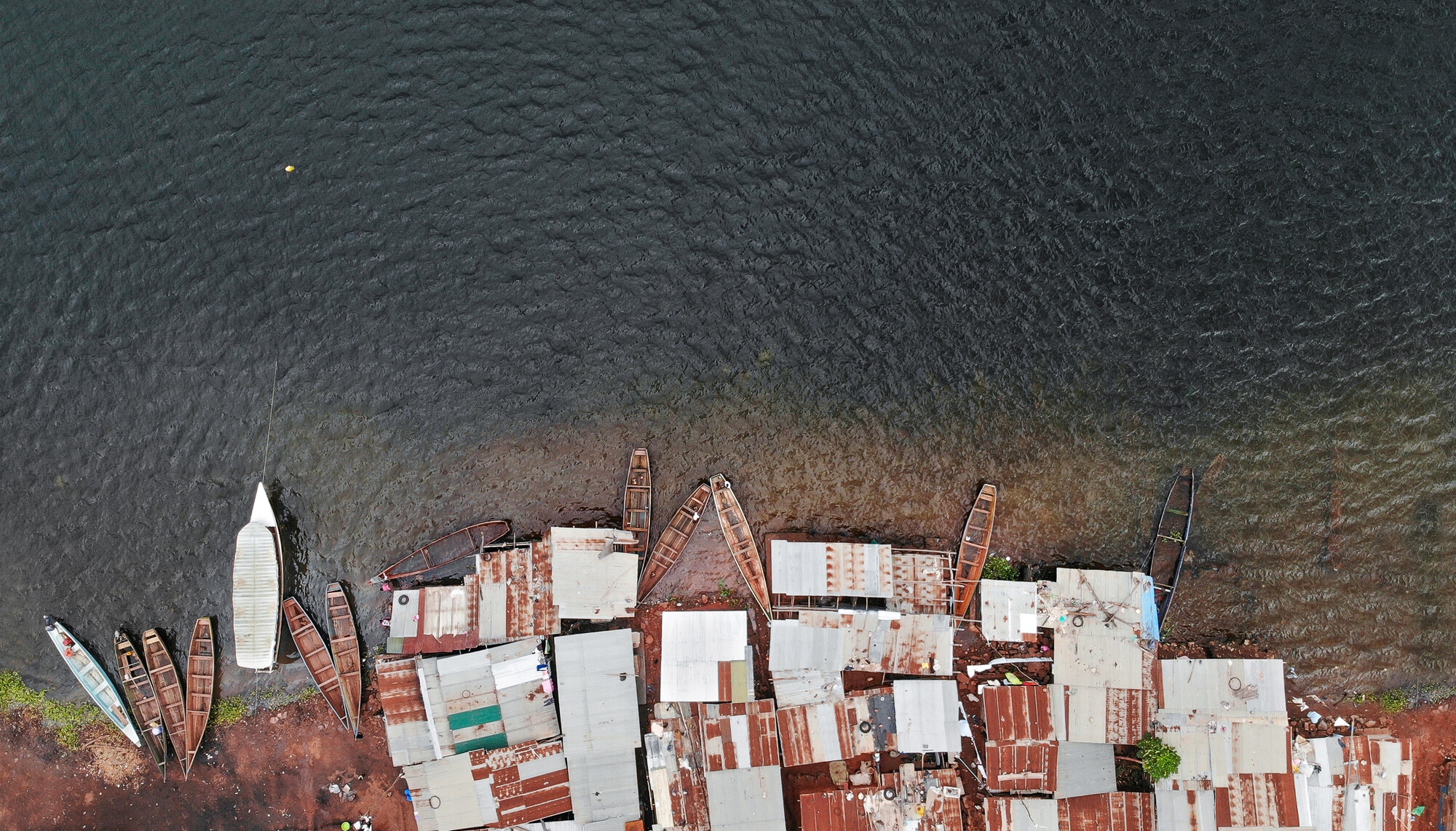
Lake Victoria supports one of the largest freshwater fisheries in the world. Here in Jinja, Uganda is an example of the numerous informal settlements that surround the lake. Pollution around such fishing villages is on the increase and more settlements around the lake are registered. © Jjumba Martin, 2018
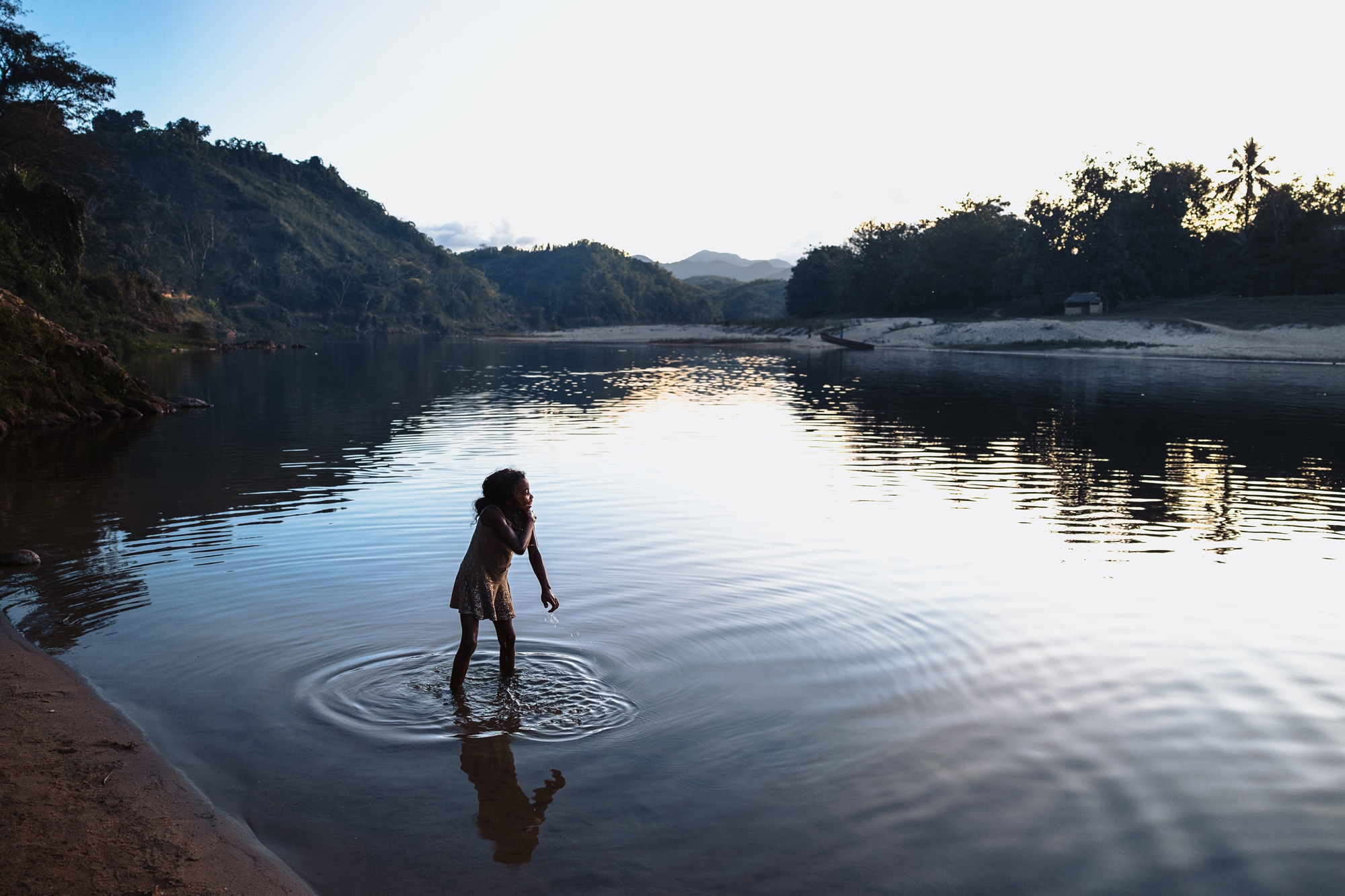
31/10/2023 Sambava, Madagascar. A young girl washes herself by the river. Here, washing in the river has historically been a common practice. For me, Madagascar will always be at heart. Those evenings by the river and how the sun kissed it… felt like nature was bragging.
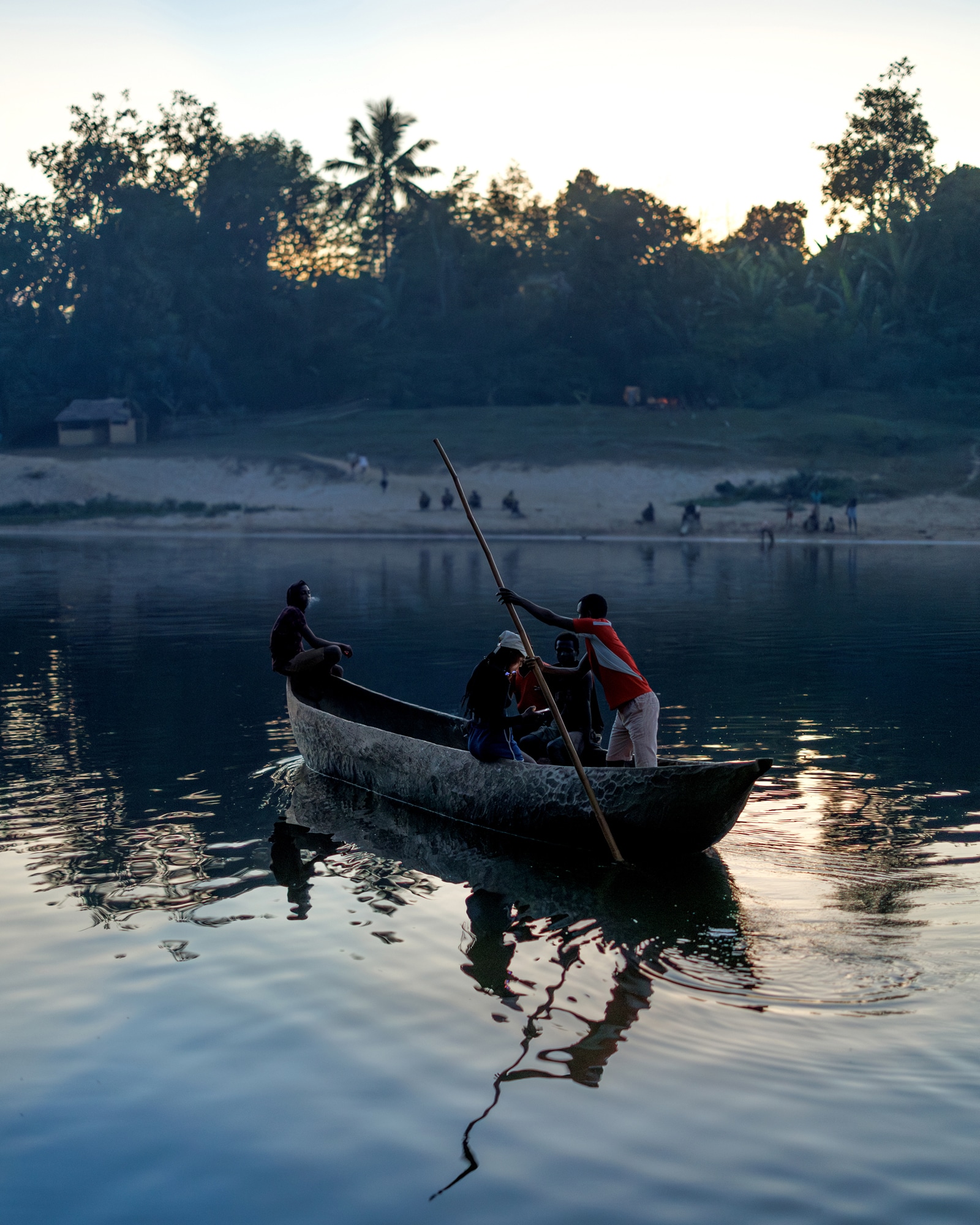
31/10/2023 Sambava, Madagascar. People cross a river using a traditional dugout canoe. crossing rivers by canoe has been a crucial part of transportation for Indigenous populations along the island's many waterways.
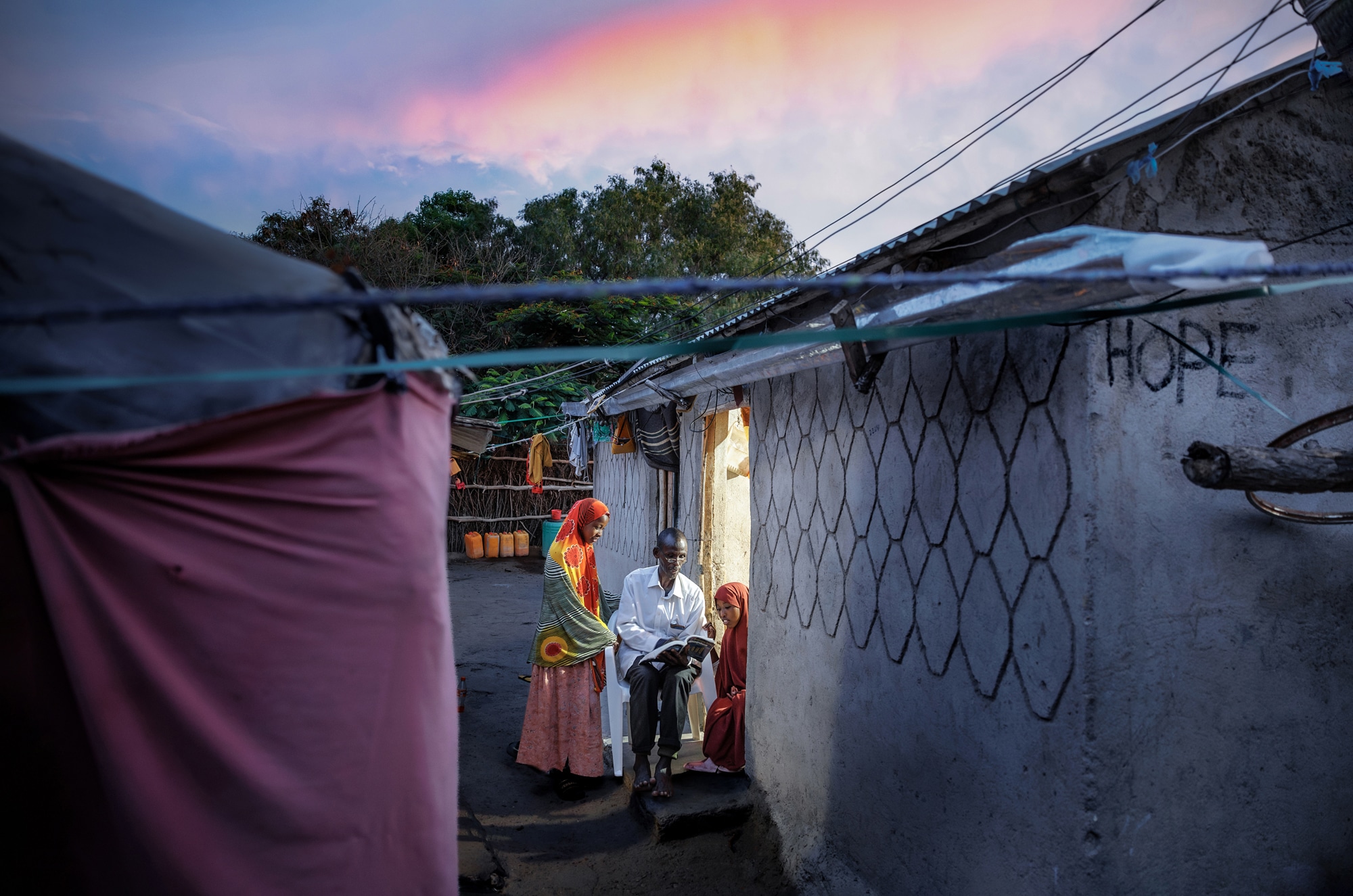
11.05.2024, Sheder refugee camp, Northeastern Fafan Zone in the Somali region of Ethiopia. 58-year-old Muse takes two of his daughters through a school exercise with the use of light from the inside of one of the rooms in his compound. The family of 14 had lived in the Sheder refugee camp for 10 years after fleeing AL Shabab in the homeland of Somalia. Not long ago, diesel-powered generators permeated throughout Sheder Refugee Camp, providing some access to electricity to homes like Muse’s. However, it was costly to operate so, it only lasted two to three hours a day. Through The Enter Energy initiative, Mercy Corps’ flagship energy program, more than 1,000 households in the camp were connected to reliable and sustainable energy after the construction of a 254 KW solar mini-grid station, the country’s first commercially licensed private solar PV-powered mini-grid. Humanitarian Energy customers have access to prepaid renewable energy, 24 hours a day—at half the cost of what they used to pay for two hours of diesel-powered electricity. © Jjumba Martin for Mercy Corps 2024.
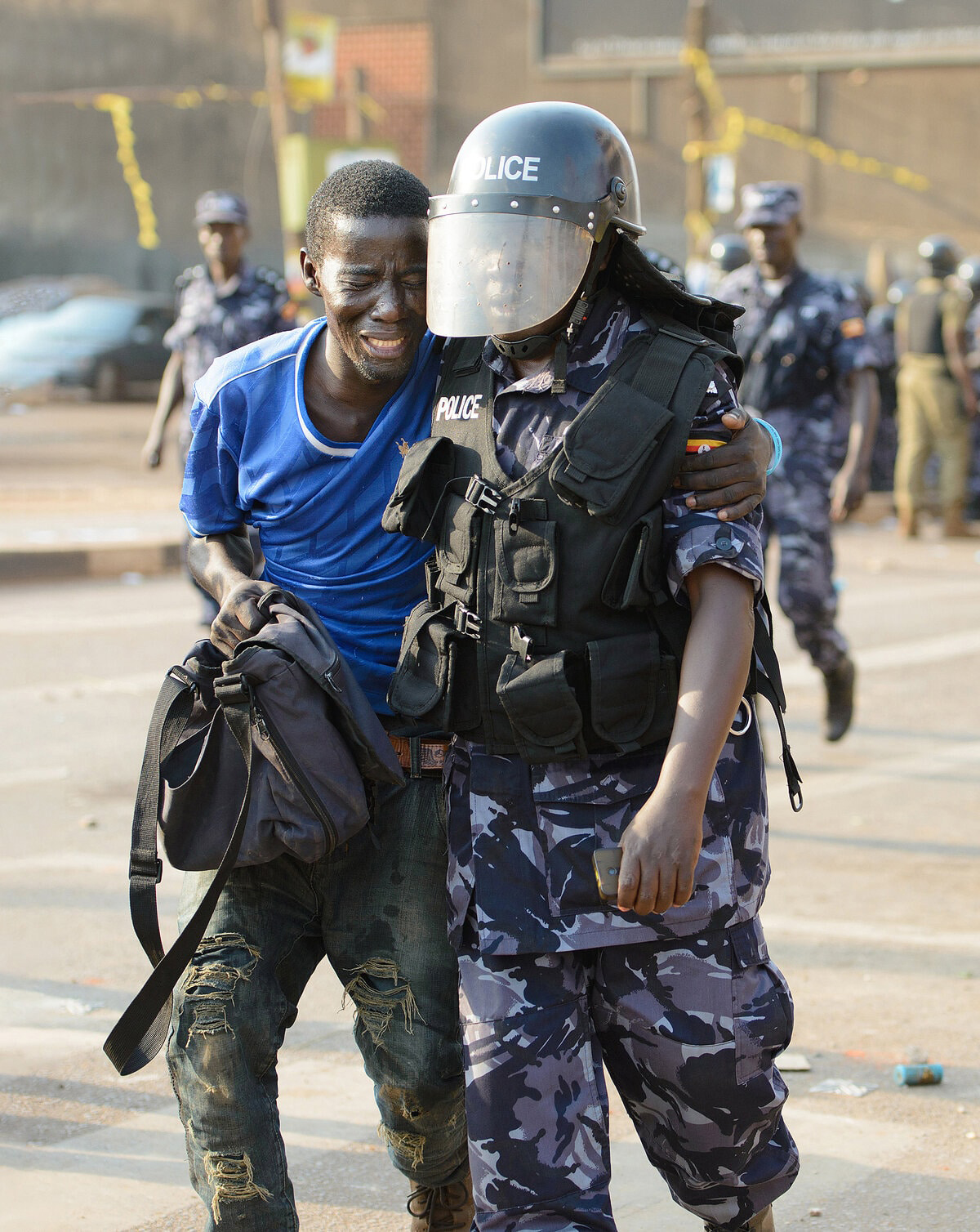
15/02/2016, A young man is helped by a policeman after being shot with a teargas canister during a demonstration in Wandegeya. Supporters of the Forum for Democratic Change (FDC) rioted after police had blocked Kizza Besigye from accessing Makerere University where he was meant to hold a campaign. This photo won The Uganda Press Photo Award (UPPA) 1st place in the news Category that year. © Jjumba Martin 2016.
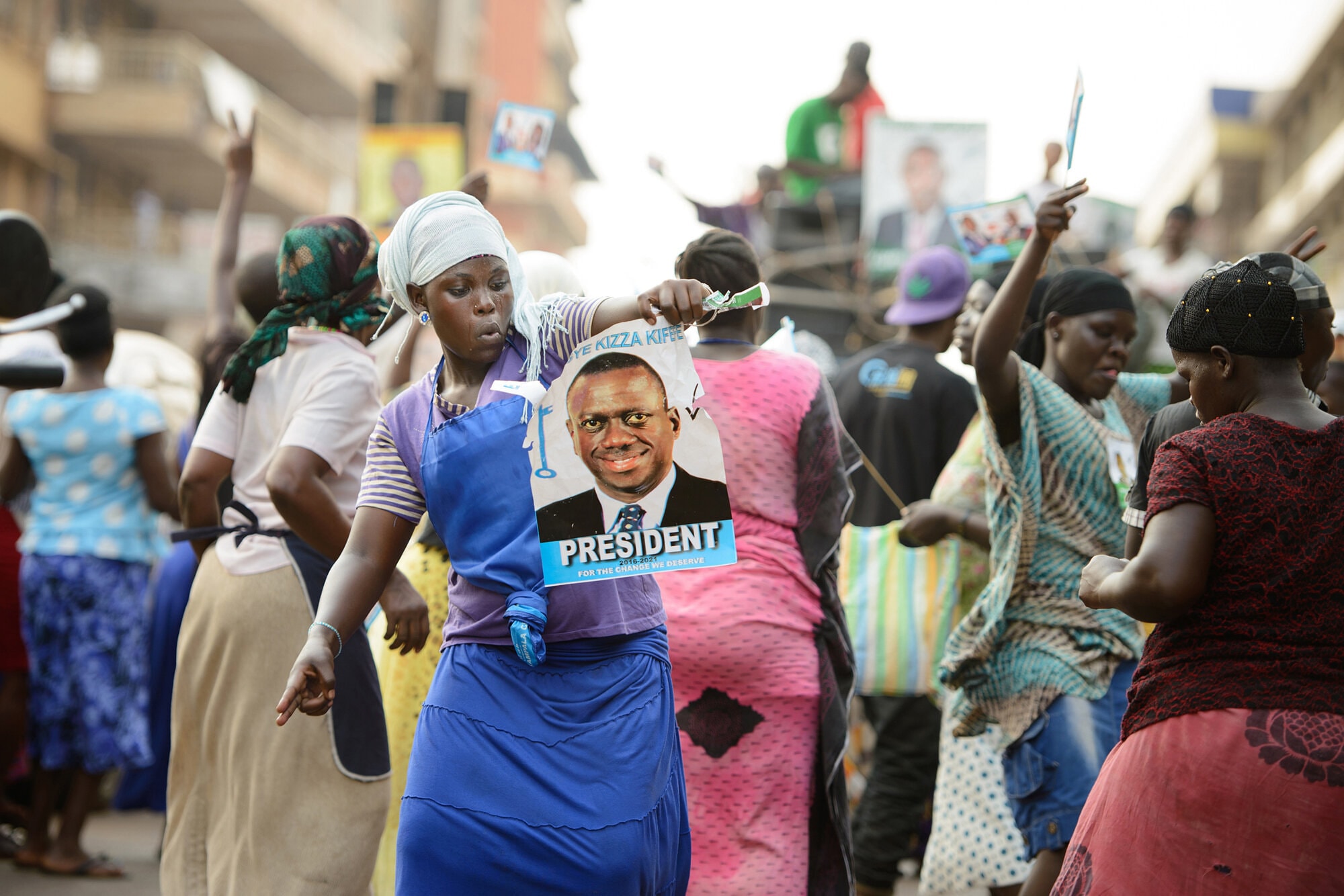
13/02/2016, A woman dancing on a street in Kampala while holding a poster of then Presidential aspirant Kizza Besigye Kifeefe. Besigye has contested for President of Uganda a record 4 times against the same candidate, President Yoweri Kaguta Museveni, who has been in power since 1986. © Jjumba Martin 2016
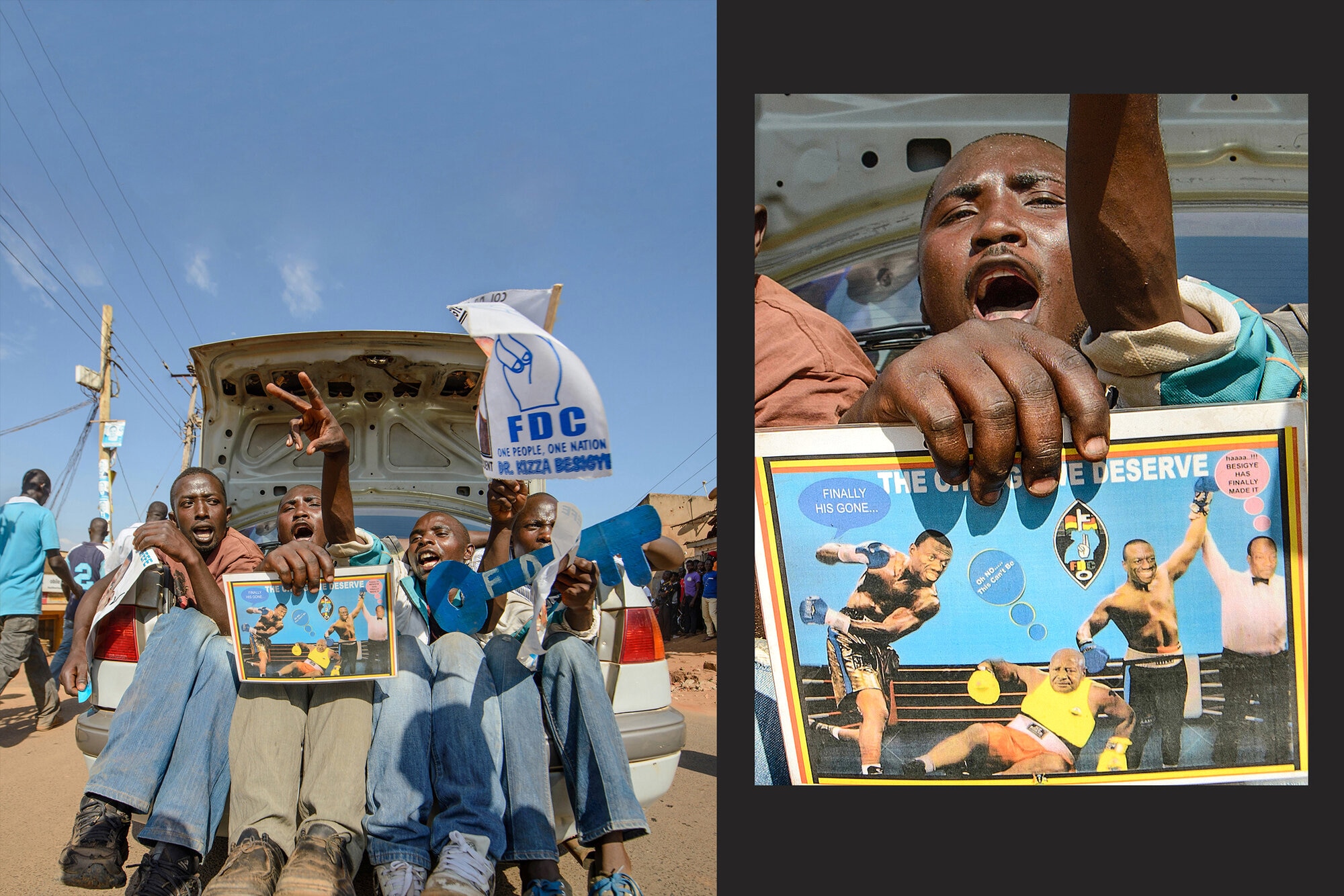
2016, Kampala Uganda. Supporters of Forum for Democratic Change (FDC) Presidential aspirant Kizza Besigye Kifeefe campaigning in Kireka, Kampala. The results of these presidential elections came with no surprise, as incumbent Yoweri Museveni secured his fifth victory with more than 60% of the votes. Besigye came second with 35%, results that sparked controversy among international observers and opposition supporters questioning the legitimacy of Museveni’s victory. Election observers condemned the lack of transparency of the Electoral Commission and criticized the campaign of intimidation against the opposition.
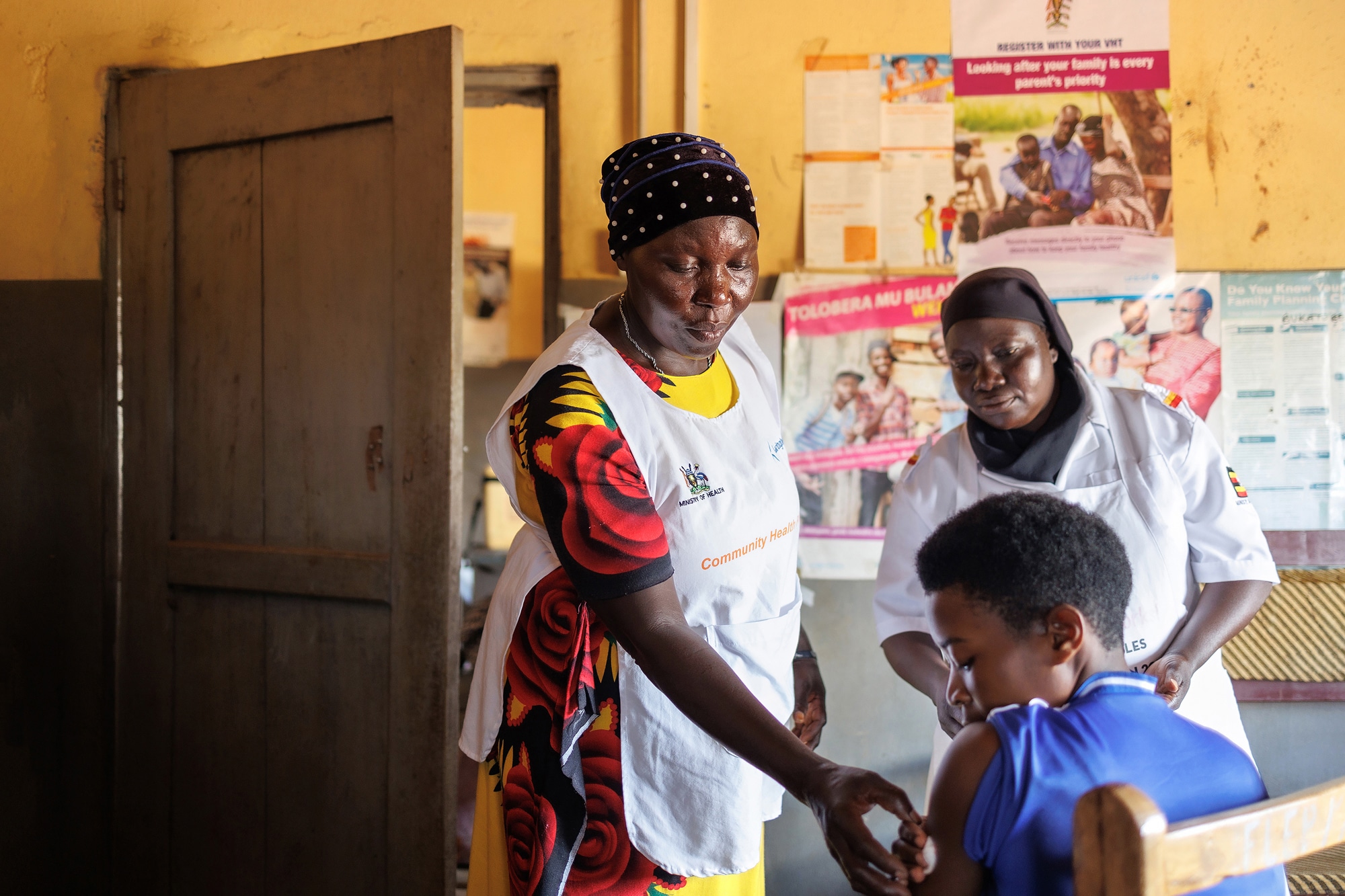
18 May 2022 Mayuge district, Uganda. Hadija, a Village Health Team member trained by Living Goods in Mayuge district administers the Sayana Press method of family planning to a young woman at Bukatube Health Center. Looking on is Sophia, the Assistant Nursing Officer at the Health Center, where she has served for 17 years. Sophia works with various Village Health Teams (VHTs) that have been trained to ease access to services, especially for expectant mothers and children under five years in different communities of the district. The main role of VHTs is to mobilize communities towards health services, hence bridging the gap between communities and health facilities. © Jjumba Martin for Living Goods 2022
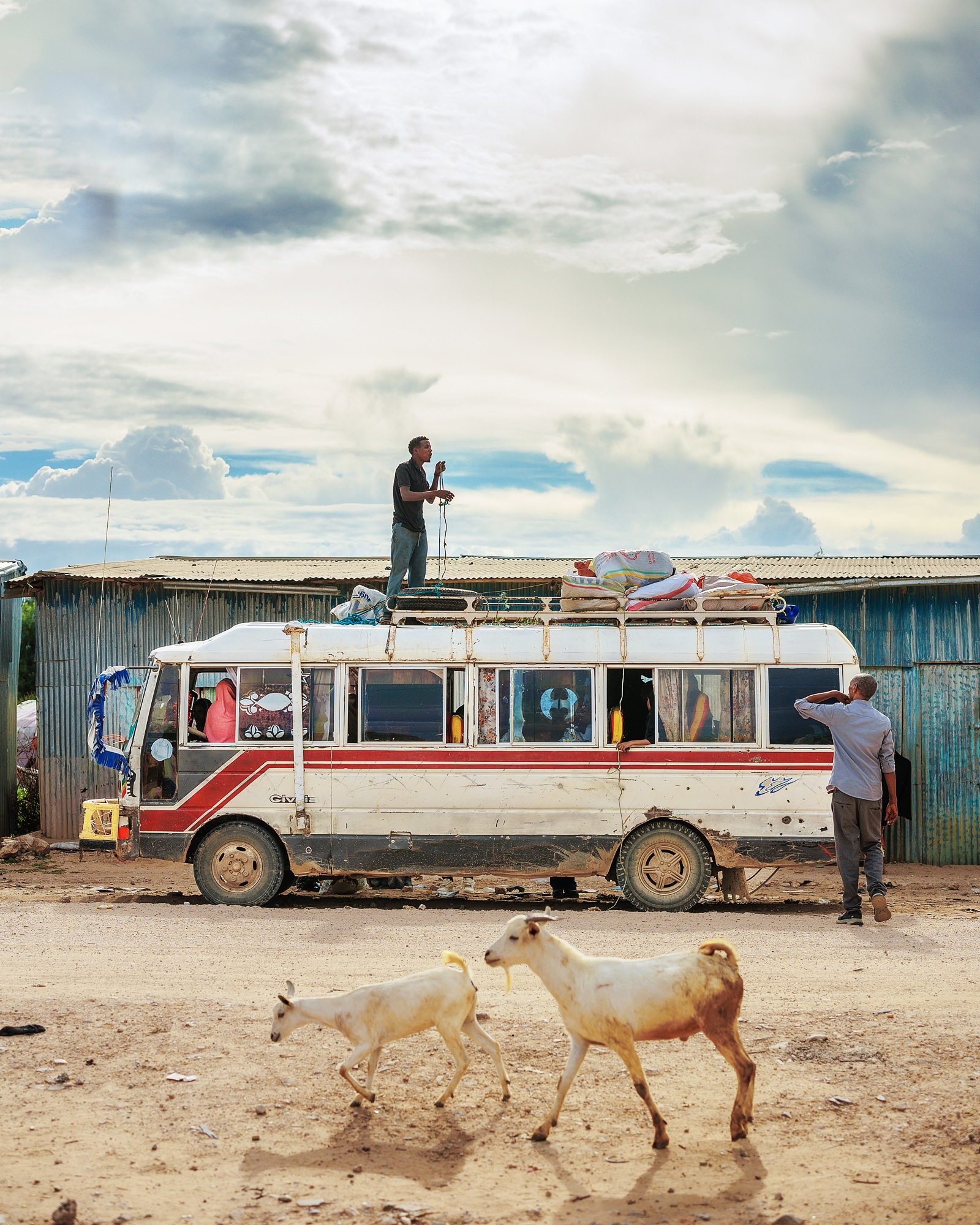
11/05/2024 Fafan Zone in the Somali region of Ethiopia near the border with Somaliland.
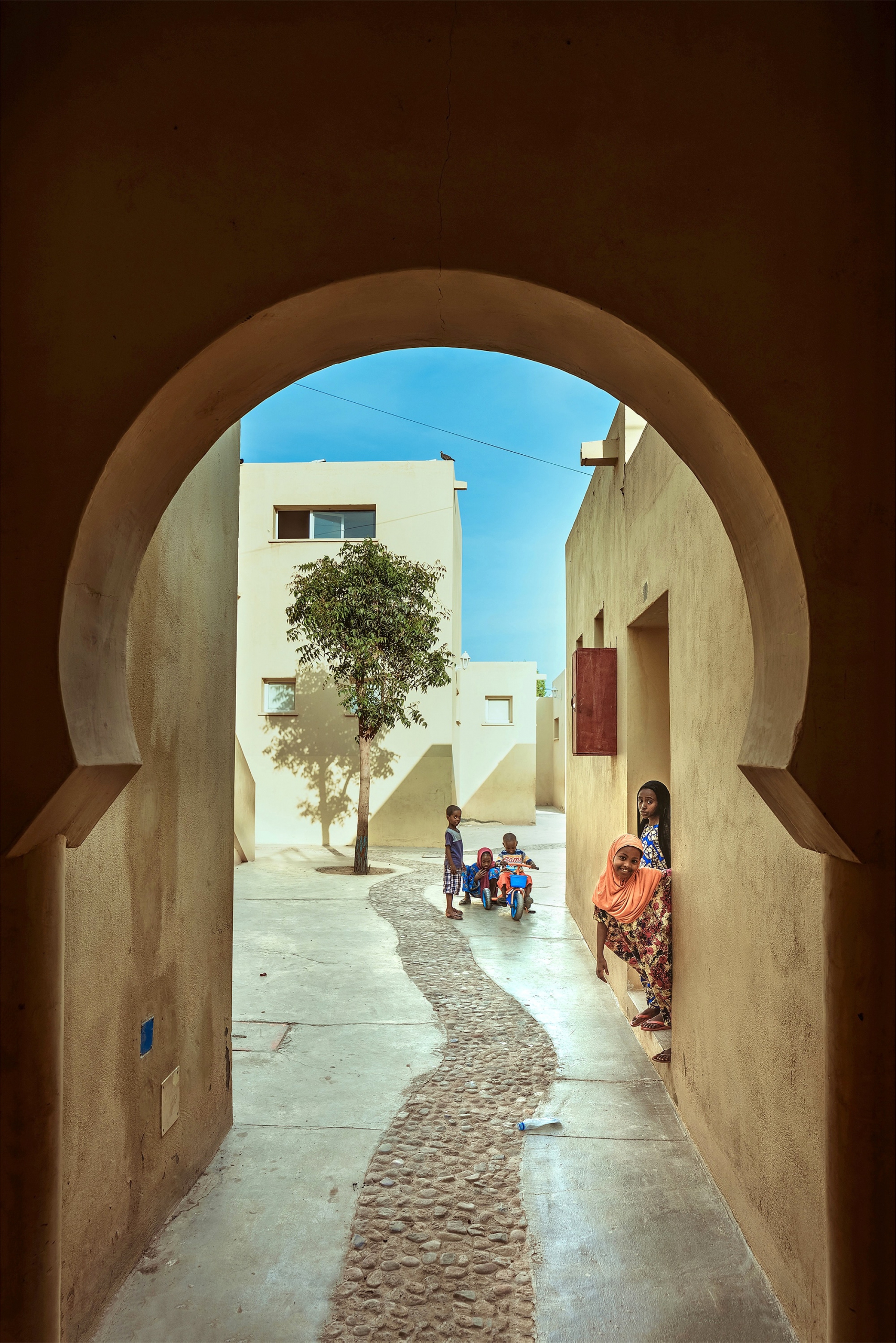
6 April 2019, Tadjoura, Djibouti. I was commissioned by the Agakhan award for Architecture to shoot a couple of projects shortlisted for the award. One of them was SOS Children’s Village, located in Tadjourah, one of Djibouti’s oldest towns. A compound of 15 houses for children, not far from where the hottest temperature ever was recorded, the architects designed this medina according to extreme weather conditions and community traditions. Based on the model of SOS Children’s Villages, the project team at Urko Sanchez Architects designed 15 houses in a medina-styled complex designed to shelter at-risk children and give them the chance of a normal childhood in a loving family. Each unit, built in cement blocks and RC structure, houses six to seven children and a foster mother. The design emulates the traditional layout of narrow streets, wind towers, and lattices providing natural shade and ventilation. Because the local people were traditionally nomadic herders and lived in broad open spaces such as the desert, the sand color chosen for the walls and the openings between the different spaces echo this lifestyle. Only the bedrooms have doors. This award is given every three years to projects that set new standards of excellence in architecture, planning practices, and historic preservation, seeking to identify and encourage building concepts that successfully address the needs and aspirations of societies across the world. © Jjumba Martin for AKDN 2019.
Tamena dancers from Busoga, Uganda. © Jjumba Martin, 2018 (Uganda)
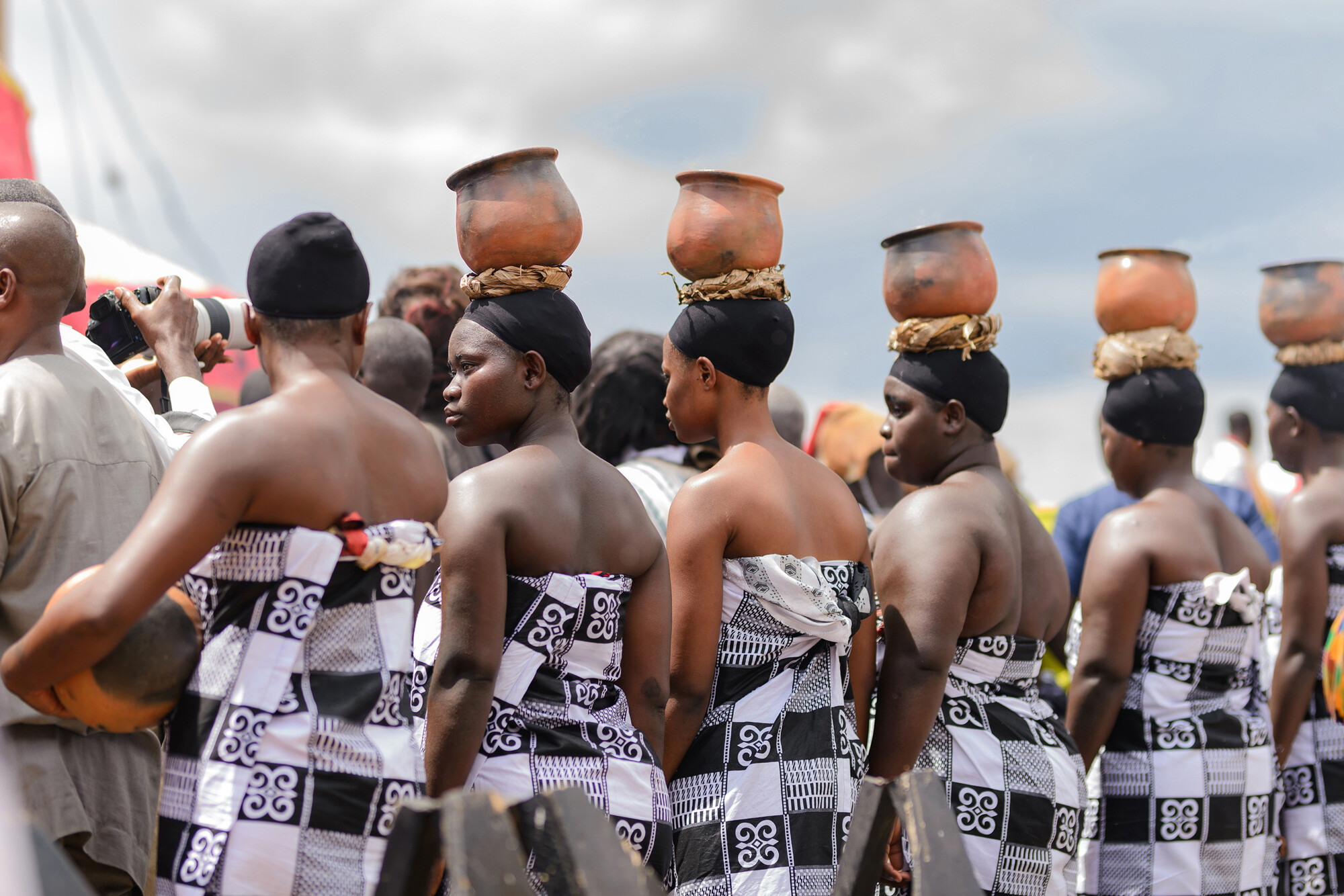
Women carrying boiling pots on their heads at the 75th Anniversary of Nana Ofori Atta's death © Jjumba Martin, 2018 (Ghana)
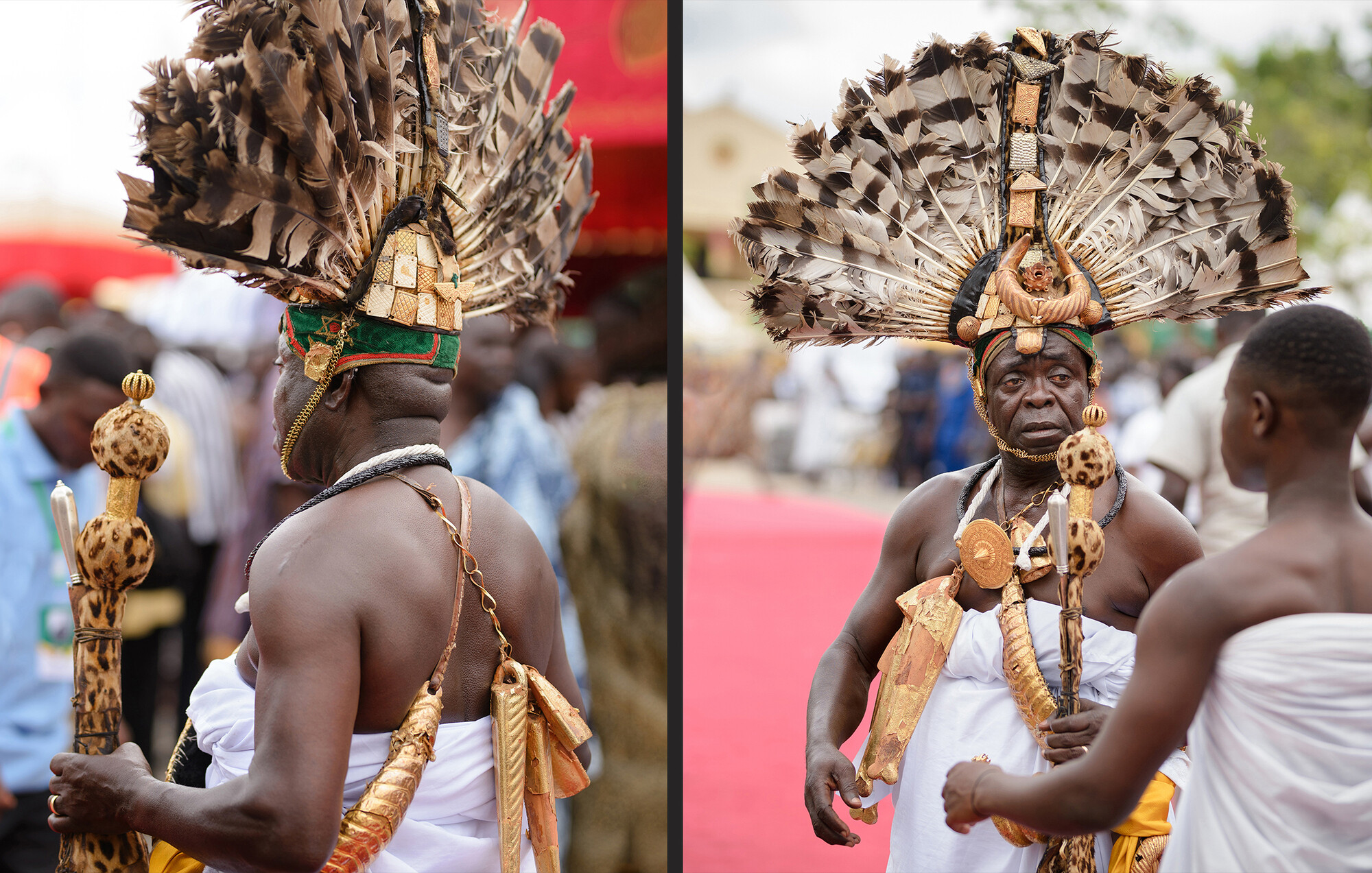
2018 Ashanti Kingdom, Ghana - The Ashanti Royal Swordbearer from Ghana wears an eagle-feathered headdress featuring golden ram horns at the 75th Anniversary of Nana Ofori Atta. His role is to protect the King at all ceremonies, warding off evil and absorbing any physical threats to his master. His ritual regalia is believed to protect not only the souls of the Royal court but the entire Ashanti Nation.  © Jjumba Martin 2018
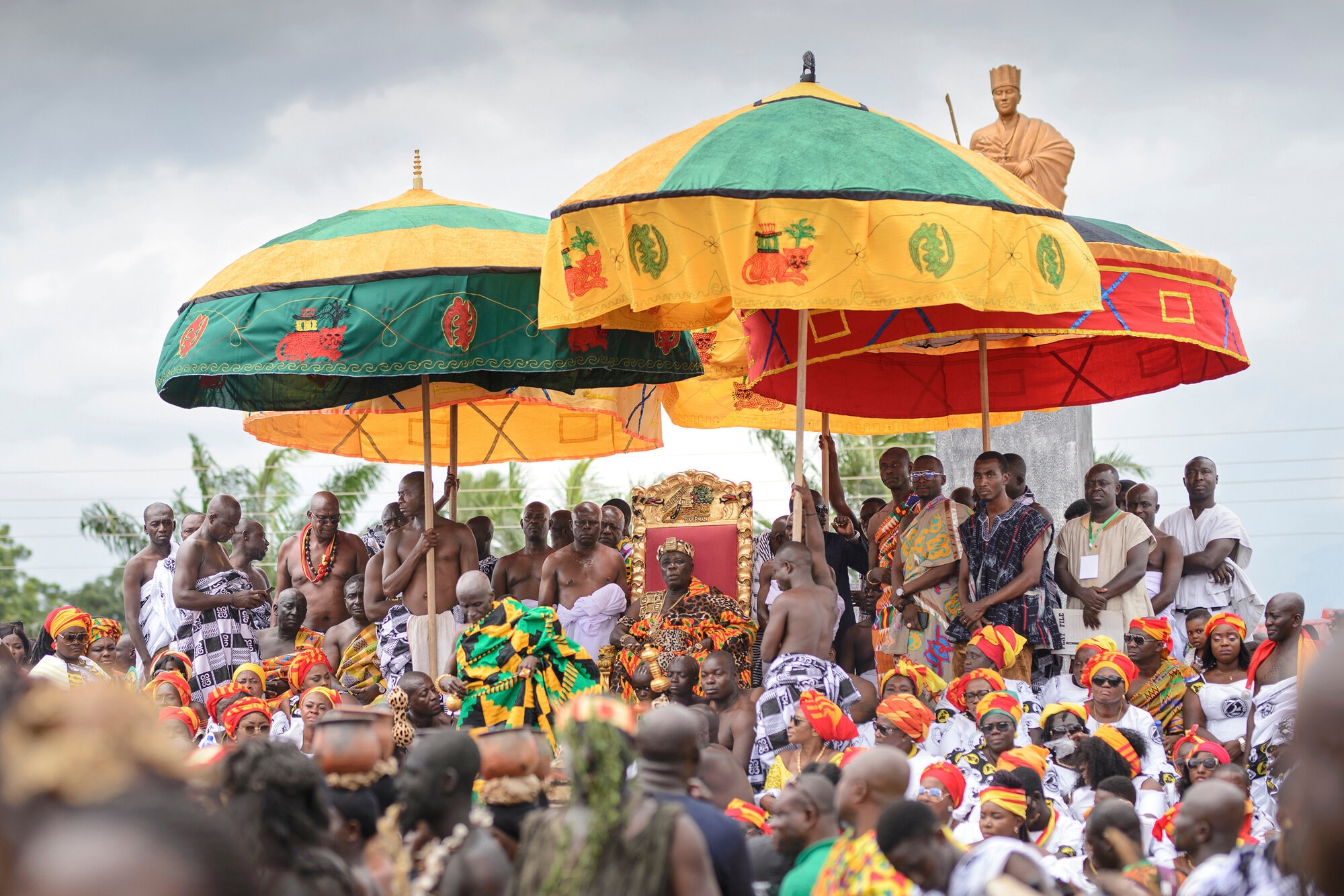
Okyenhene Osagyefuo Amoatia Ofori Panin looks over his people at the 75th Anniversary of Nana Ofori Atta. © Jjumba Martin, 2018 (Ghana)
26/08/2023, Buliisa, western Uganda. Mugisha, a 50-year-old father of seven, refused to leave his home without adequate compensation. A local court charged him with impeding a government program and other citizens who opposed the oil project. More than 96 cases of people being detained or arrested for opposing the controversial East Africa Crude Oil Pipeline (EACOP) were reported by then. © Jjumba Martin for Global Witness 2023
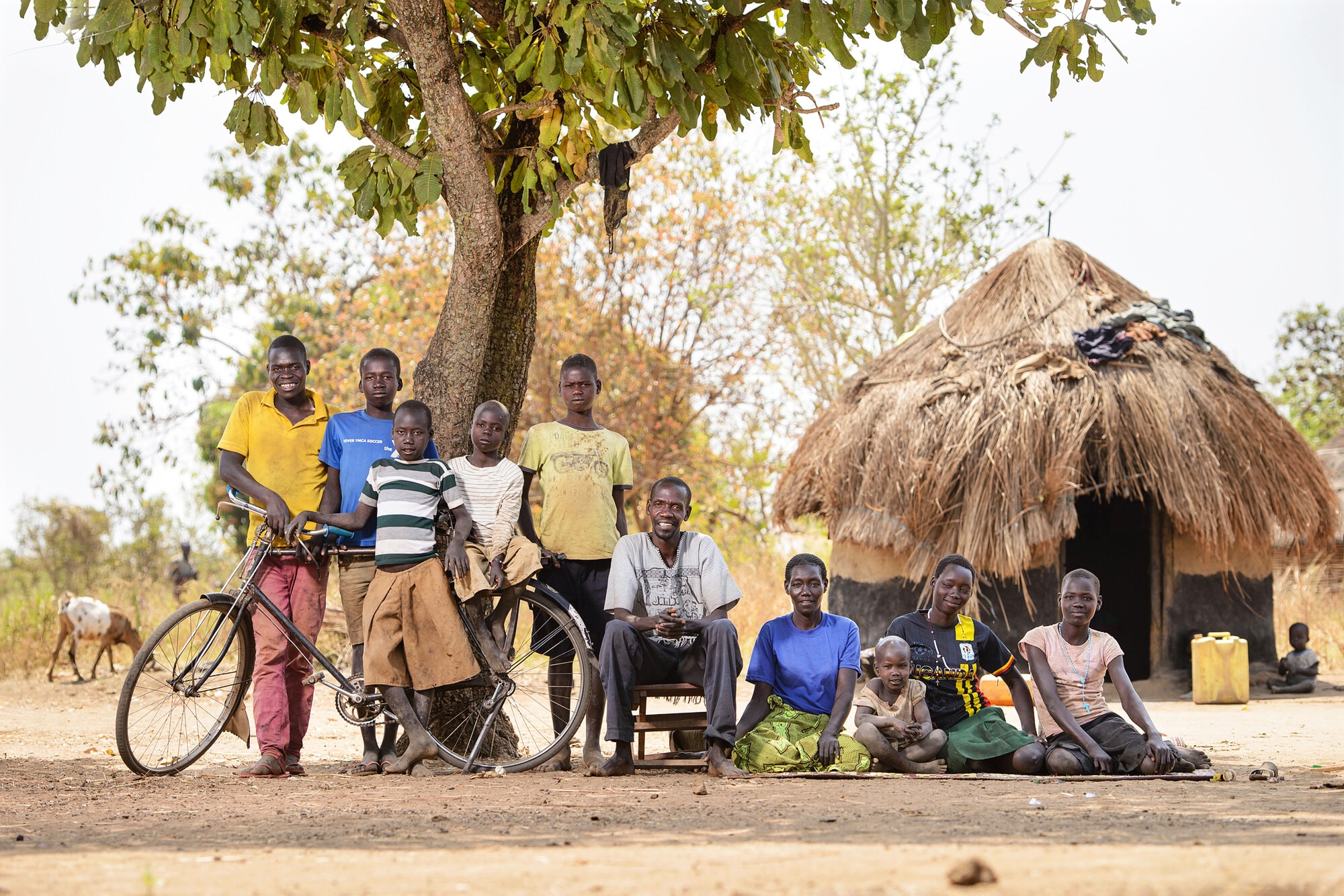
One Ugandan farmer's family. © Jjumba Martin, AgDevCo 2018
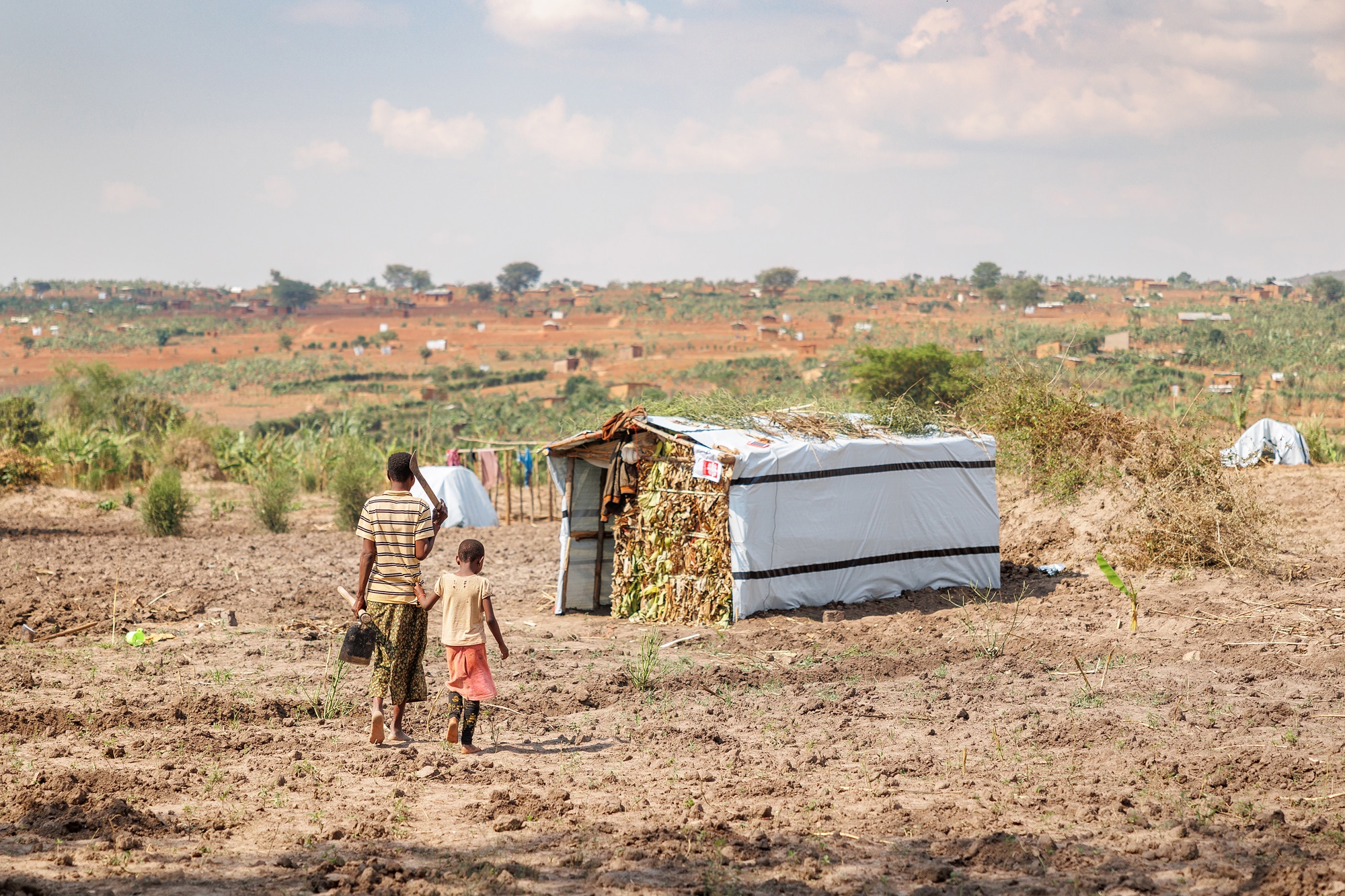
Stella walks with her 6-year-old daughter towards their newly set up house in Nakivale Refugee Settlement, Isingiro district, Uganda. Stella a mother of three came to Uganda several years ago, from Rwanda, fearing for her life. She lived with local communities until recently when the Government of Uganda allocated her land in Nakivale Refugee Settlement. Each refugee family in the settlement is initially given some food rations, as well as non-food items like blankets, sleeping mats, and household shelter kits. The family is also given a small piece of land for subsistence agriculture and each season, the family is expected to be more self-sufficient and, eventually, “phased off” food and other humanitarian assistance. © Jjumba Martin for Catholic Relief Services 2018.
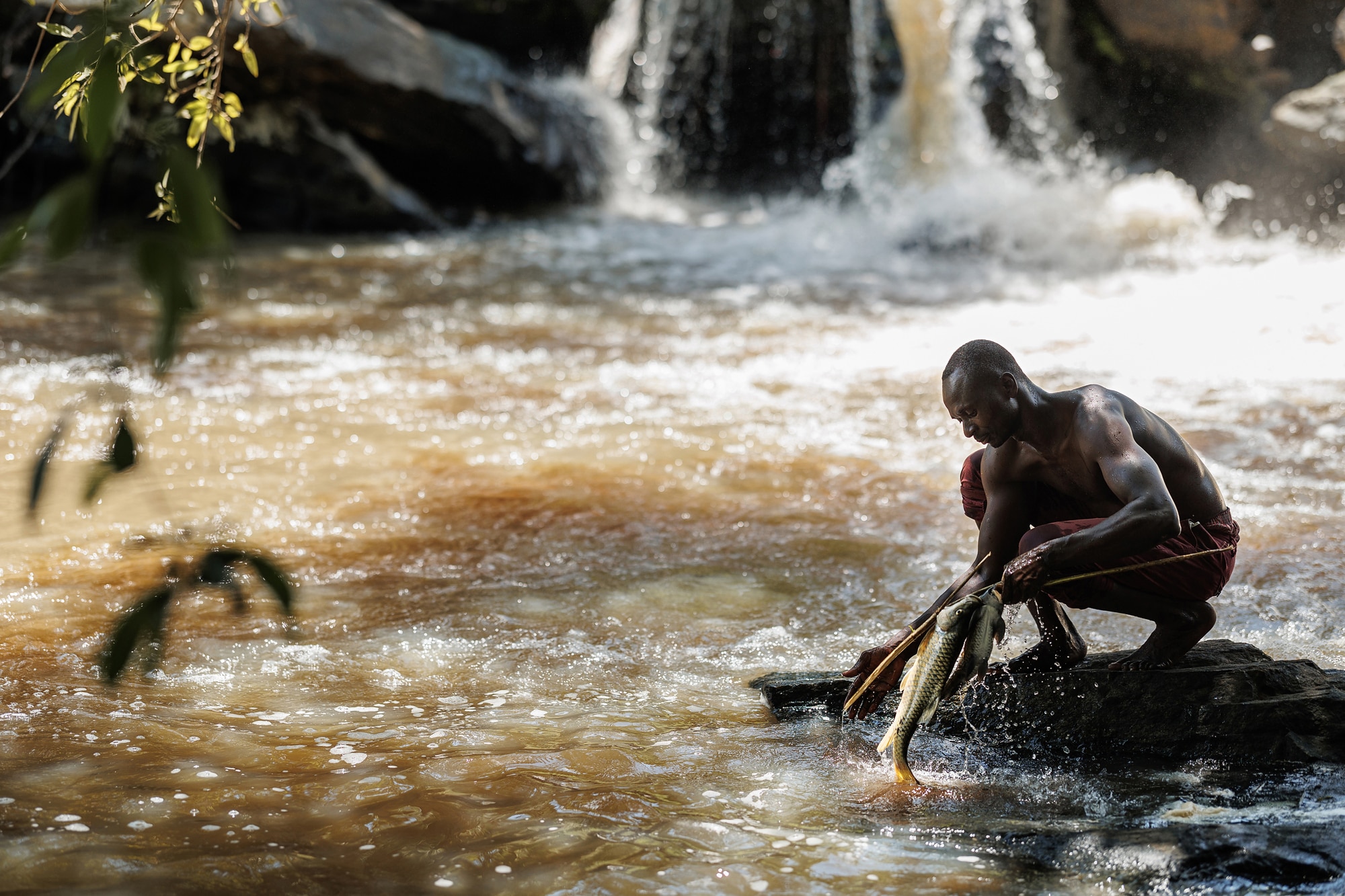
Locals around Papa Falls in Aswa River catch fish for consumption and sale in their community. In such a way and others, the falls are vital to the communities around them. Umoja Wildlife Conservancies is a non-profit working to strengthen community participation in developing strong community structures towards conservation through demonstrating tangible benefits to neighboring communities and landowners. Umoja empowers communities to address the conflicts on their own, thus encouraging coexistence between people and wildlife amidst escalating human-wildlife conflict as visible all over the world. © Jjumba Martin, Umoja Wildlife Conservancies 2023
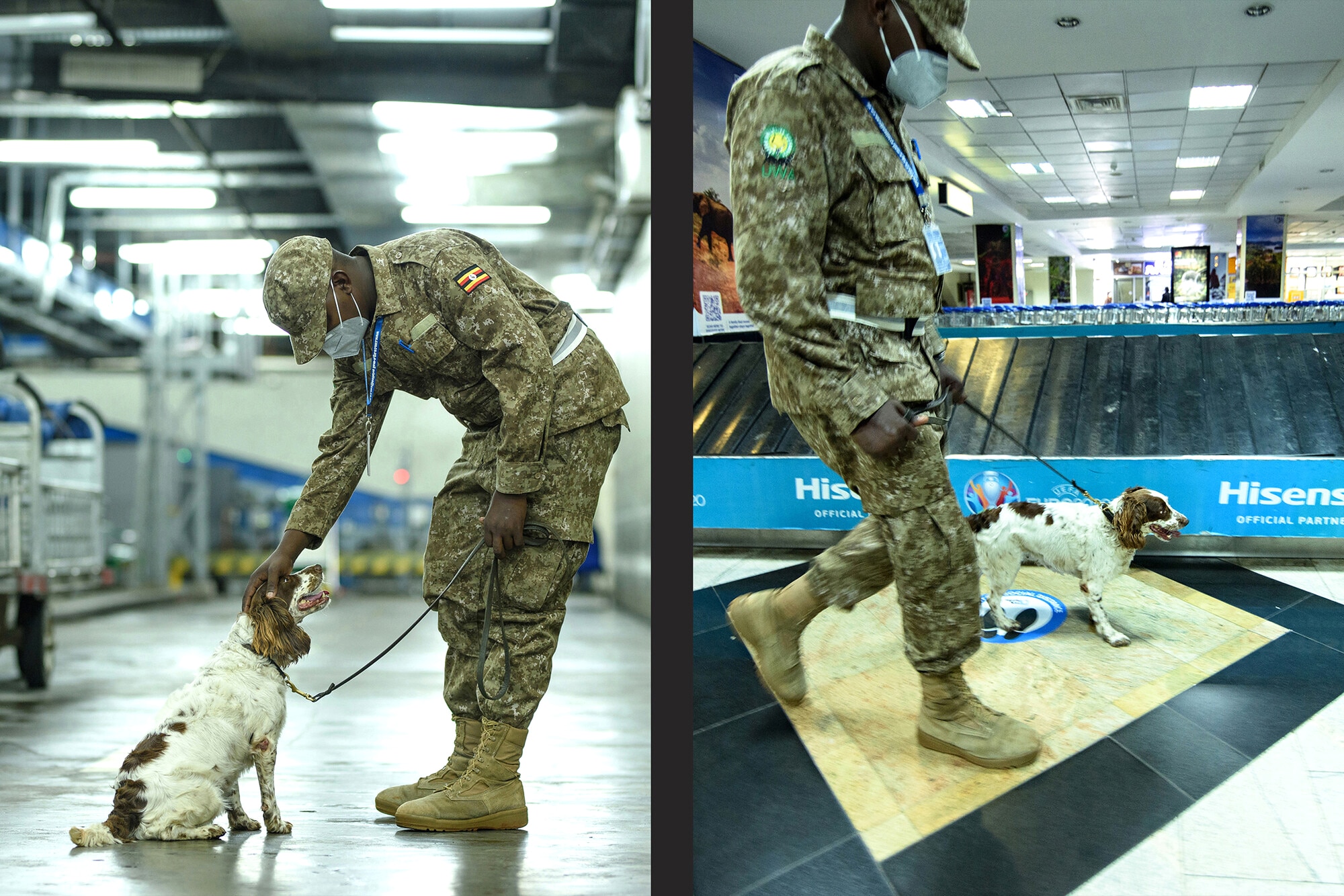
In the effort to Stop wildlife trafficking, African Wildlife Foundation (AWF) has deployed sniffer dogs to intercept smuggled wildlife products in a program called “Canines for Conservation” This program trains detection units of wildlife rangers and sniffer dogs and deploys them to strategic exit and entry ports. Primed to intercept even the smallest piece of wildlife products concealed in the most clever ways, the teams are stationed at trafficking hotspots in Uganda, Kenya, Tanzania, Mozambique, and Botswana to intercept and deter offenders from using these routes, but also to collect evidence used to prosecute wildlife cases. Studies show that in East and Central Africa, South Sudan, and Uganda are critical smuggling points for elephant tusks, pangolin scales, hippo teeth, and other wildlife as they make their way mainly to East Asia. Shot On assignment with the African Wildlife Foundation (AWF) 2020
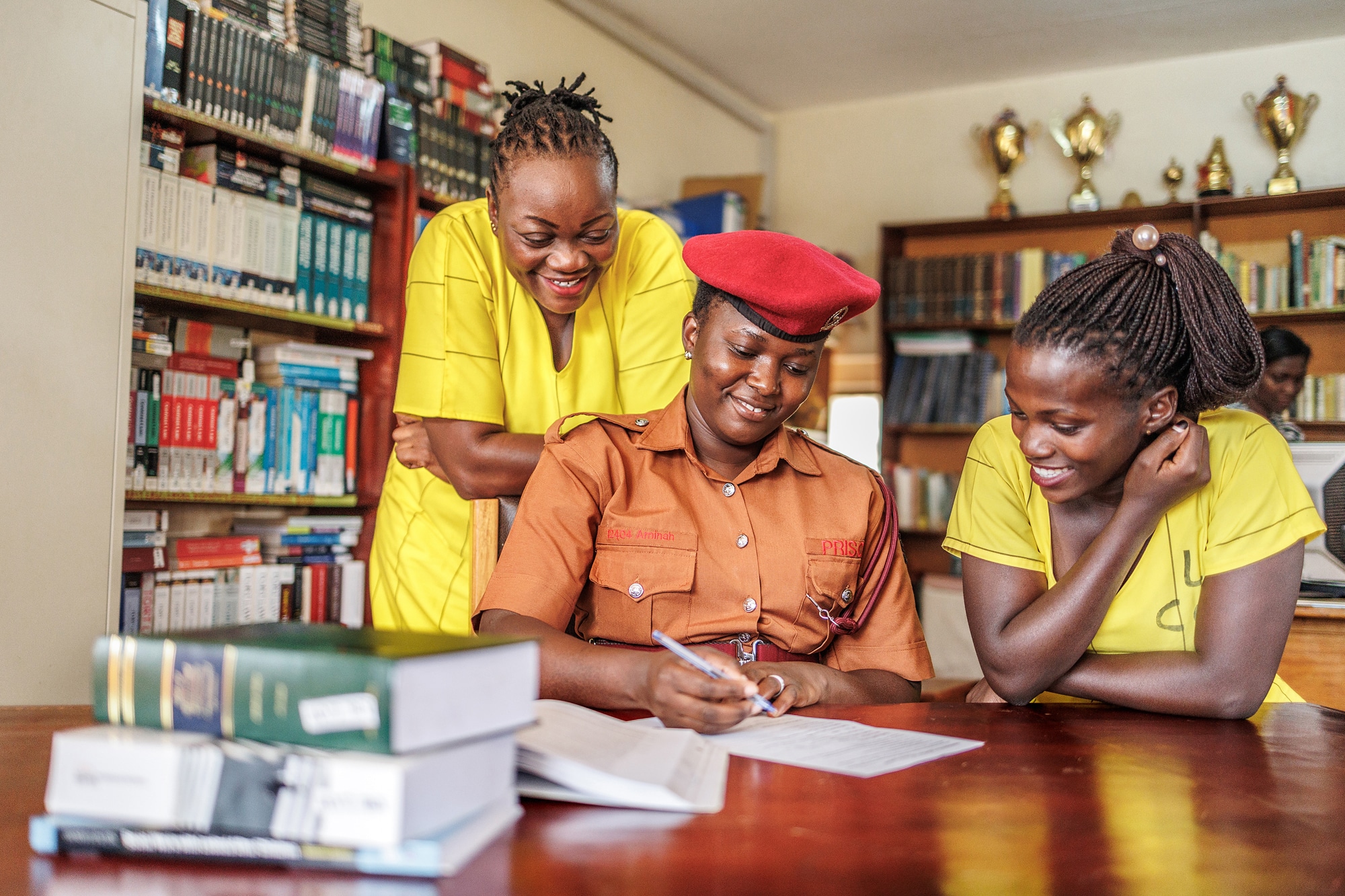
An Inmate paralegal having a chat with the prison officer paralegal at Luzira Women's Prison. Founded in 2007, Justice Defenders is a nonprofit that works to provide legal education and services to communities that are vulnerable and defenseless. Their mission is to create a more just society by ensuring everyone has access to a fair hearing. © Jjumba Martin, Justice Defenders 2022
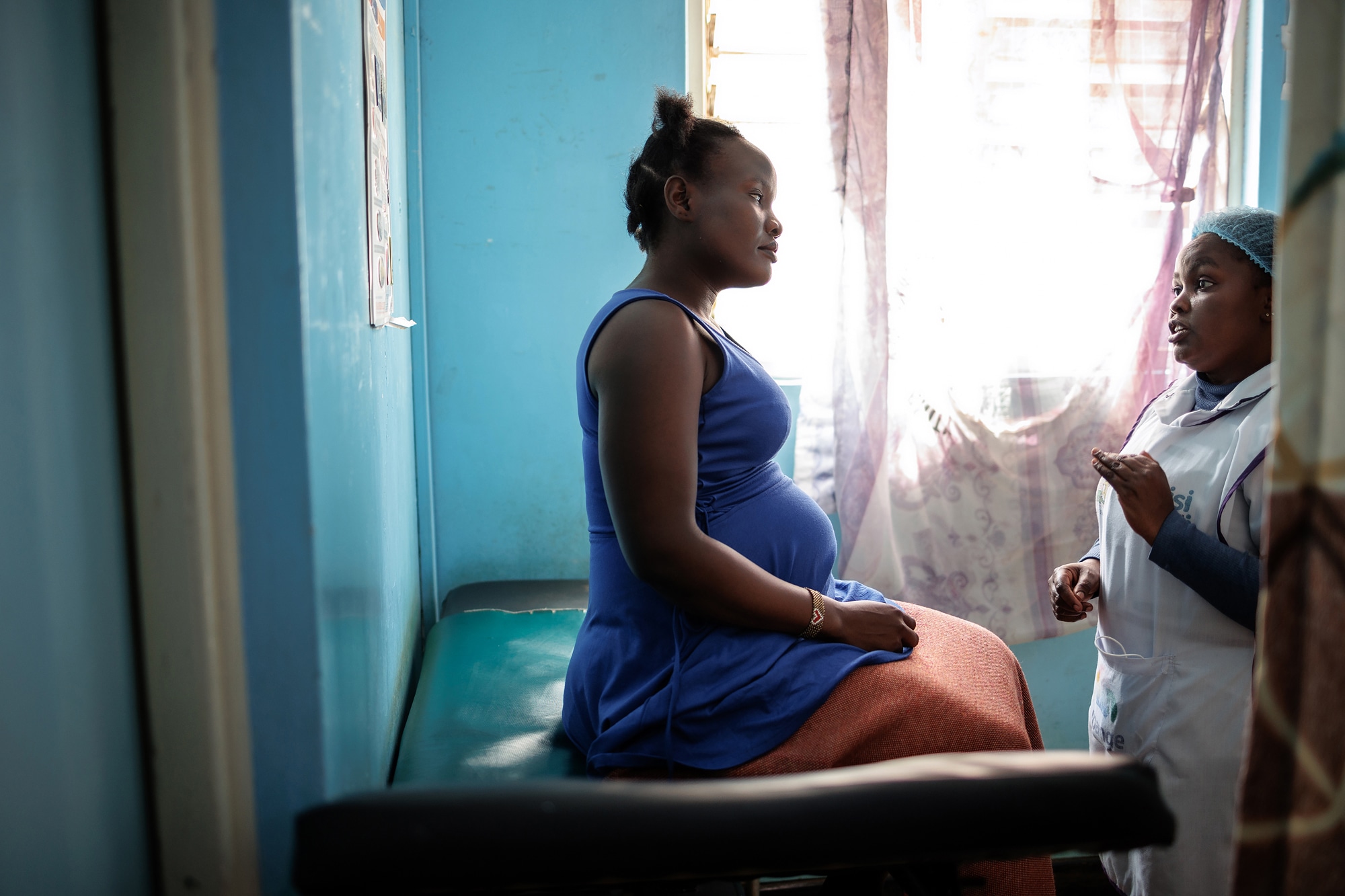
Nairobi, Kenya, Nzioka is six months pregnant. She has been using the PROMPTS platform, which updates her on how to care for her baby and herself. Additionally, she receives reminders to visit the clinic to ensure her pregnancy is safe. During this visit, the nurse checked the baby's heart rate and confirmed that her pregnancy was developing healthily. © Jjumba Martin, JACARANDA Health 2022
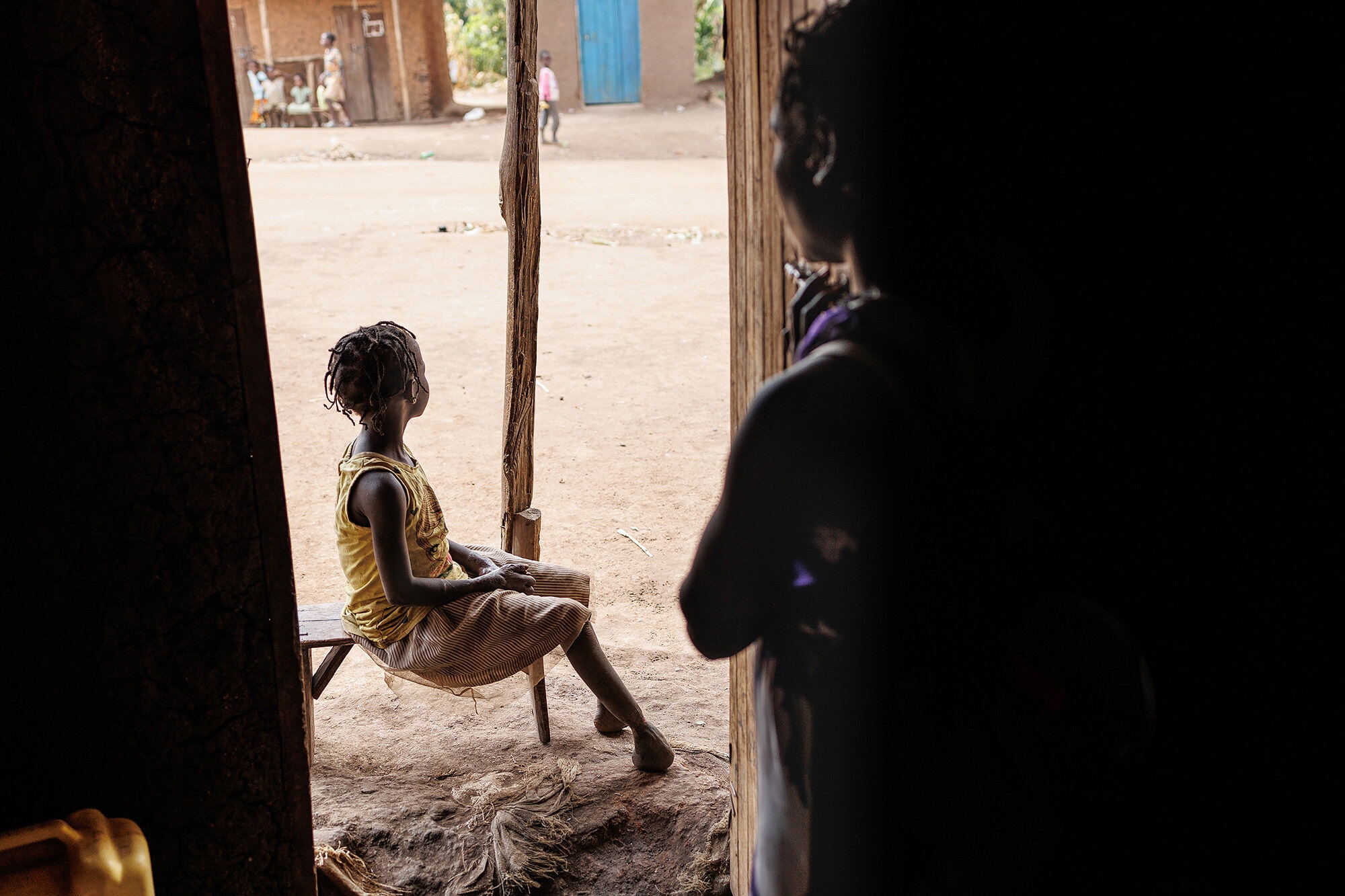
In Kyaka settlement-Uganda, this little girl continues to agonizingly grow through the scars of cruelty done to her by her father in revenge for a misunderstanding with her mother. The little girl's mother narrates, between sobs, how her husband turned his anger into the despicable. He forcibly tied a rope around his own daughters' limbs so tightly that the rope ate onto the poor child's fragile flesh day by day, sinking and rotting in for over a week. She was rescued later when the rope had cut through her limbs, denying her a chance to ever walk. Her father was jailed but soon escaped to kill them both. They ran for their lives and abandoned their home in Congo to find refuge in Uganda. © Jjumba Martin, Chance for Childhood.
March 24, 2025 Korr, in the Marsabit county of Kenya - Like in many other desert areas, water scarcity is a severe issue among the Rendille, impacting the community's well-being and daily lives. This makes it difficult to sustain agriculture, leading to challenges in securing enough food and increasing the burden on women and girls who must travel long distances to find water.  The community relies heavily on artesian wells. The way they roll jerrycans on the ground is quite a scene. - © Jjumba Martin 2025.
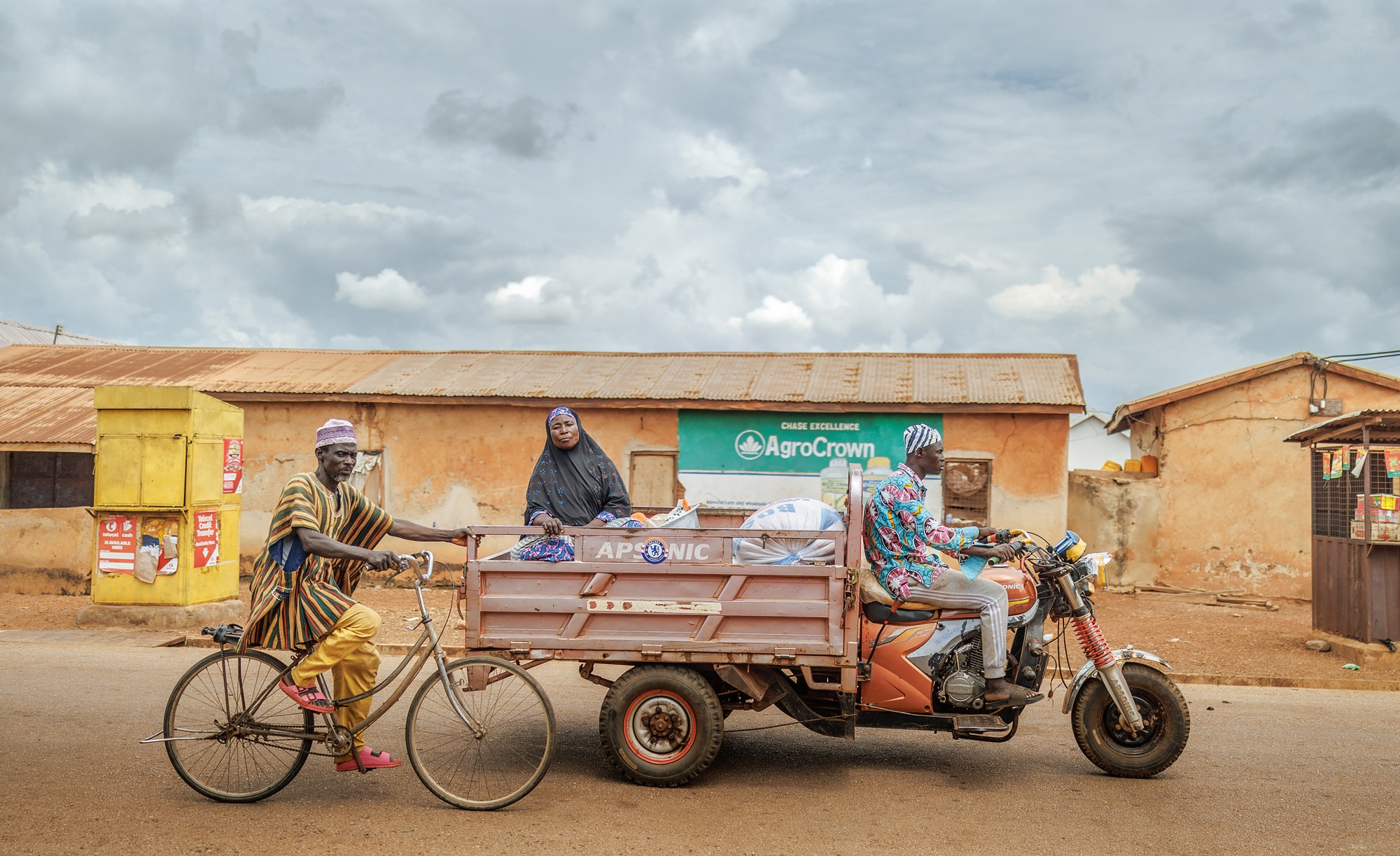
Tamale, Ghana 2024.
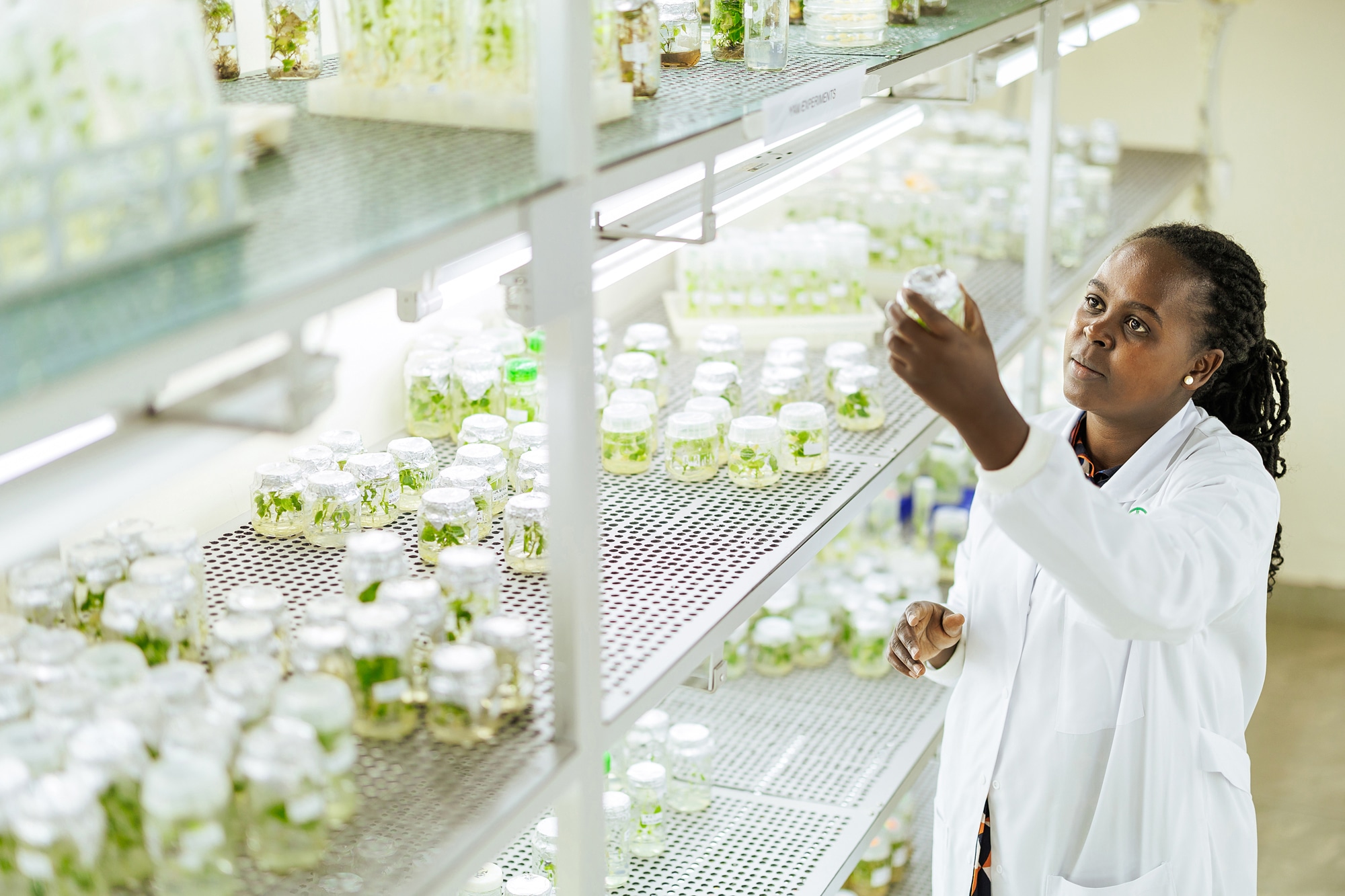
Tissue culture-based conservation of cassava in a tissue culture lab at the National Agricultural Research Organisation (NARO). Over the last 30 years, NARO has been at the forefront of driving sustainable agricultural transformation in Uganda and beyond, with a remarkable portfolio of over 1,000 technologies, innovations, and management practices, including high-yielding and drought, disease and climate-resilient crop varieties, which have positioned Uganda as a key player in agricultural innovation within the East African region.
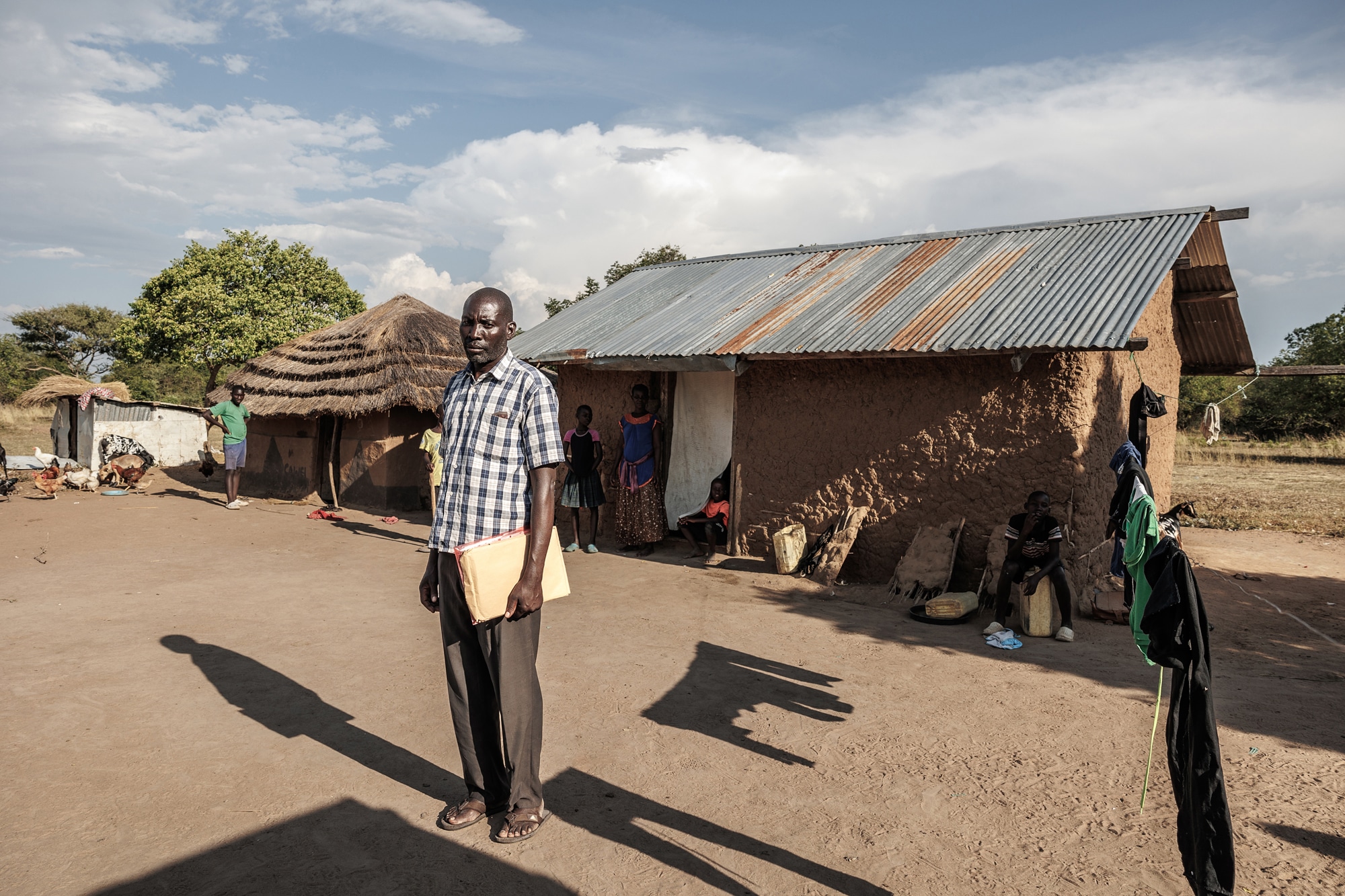
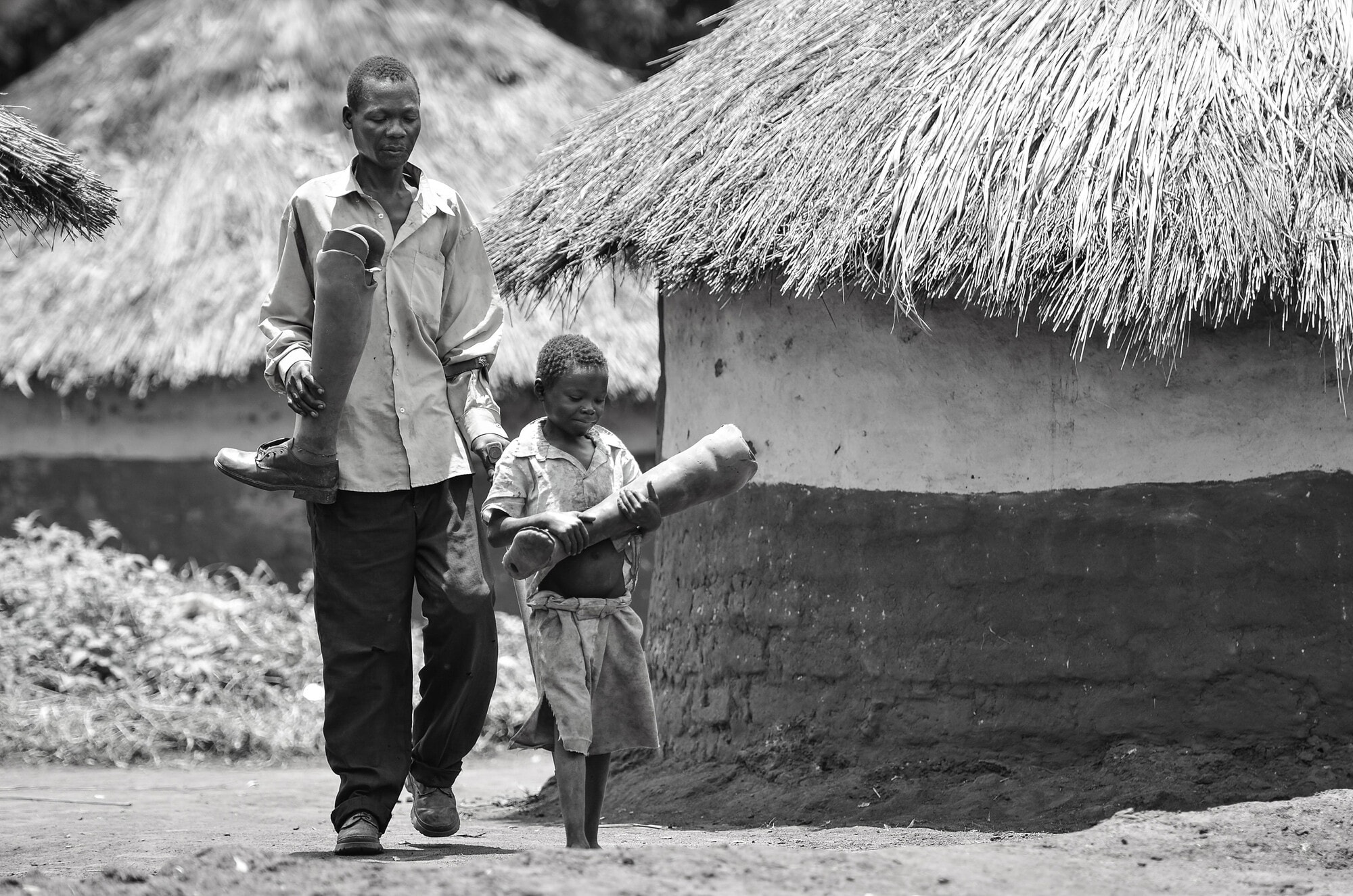
2015, Pader district, Northern Uganda. Ocitti Ceaser with his son, carry prosthetic legs for repair. Ceaser is a Land mine survivor who lost both his legs during the Kony war and had a bilateral below-knee amputation. These prosthetics must be replaced every 2-3 years for adults due to general wear and tear breakages and rigorous activities like farming. © Jjumba Martin, AVSI Foundation 2015
  • Photographer in Uganda
  • Photo studio uganda
  • Photographer in kampala
  • Documentary photographer Uganda
  • Photographer in east Africa
  • Photo journalist Uganda
  • Photo journalist in Uganda
  • Photo Journalist
© 2026 Jjumba Martin | All Rights Reserved.